IUI vs IVF – Difference, Success Rates & Cost Comparison (Expert Guide)
Choosing between IUI and IVF is one of the most common fertility decisions couples face while seeking treatment in Panchkula, Chandigarh, Mohali, and surrounding Tricity regions.
Infertility affects approximately 15–18% of couples in India (WHO estimate; CI ±3%), making assisted reproductive treatments increasingly relevant.
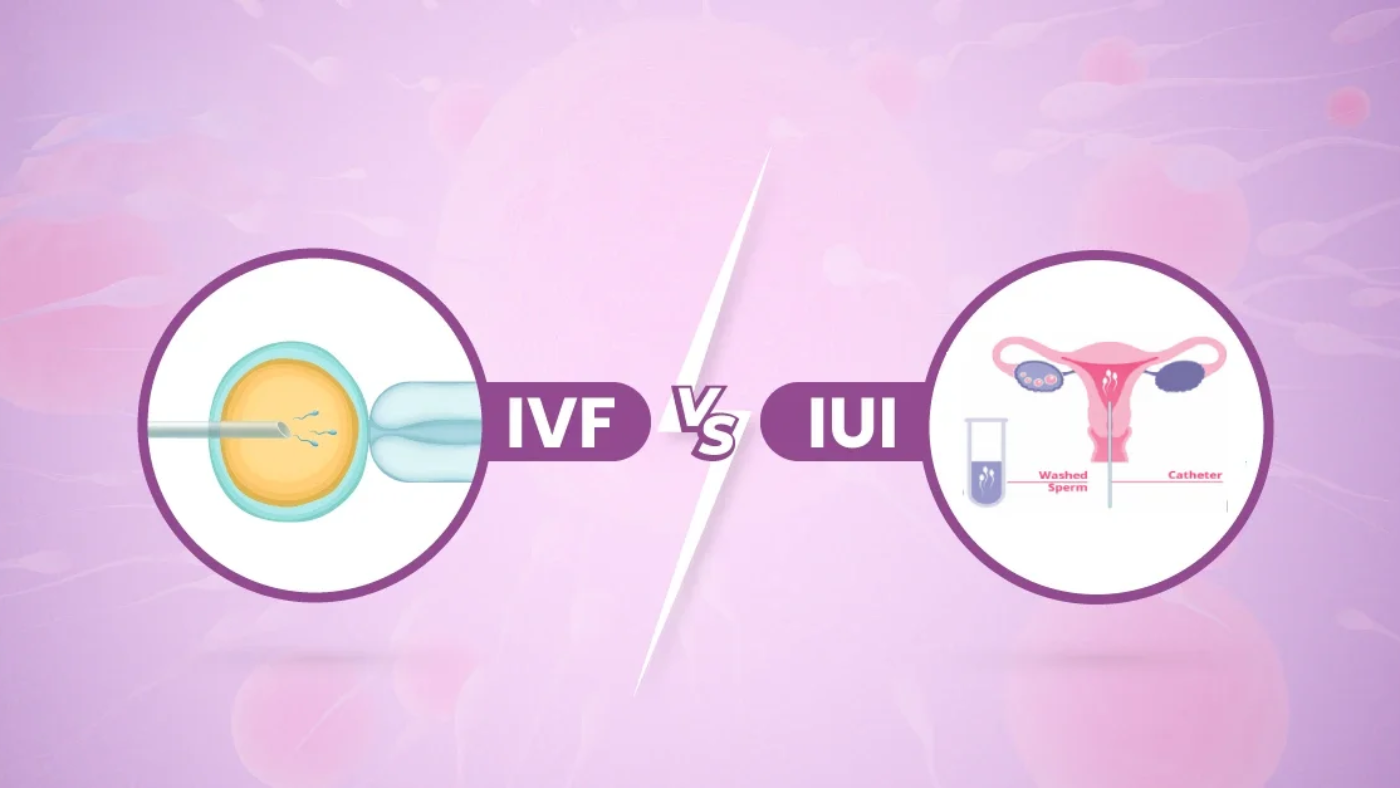
Although both IUI (Intrauterine Insemination) and IVF (In Vitro Fertilization) aim to achieve pregnancy, they differ significantly in procedure complexity, cost, success rates, and medical indications.
This guide follows the clinical counselling framework used at
Kore Fertility Solutions Pvt. Ltd
under fertility specialist
Dr. Nitasha Gupta, serving Panchkula, Chandigarh & Tricity couples.
What Is IUI?
IUI (Intrauterine Insemination) is a minimally invasive fertility treatment in which processed, motile sperm are placed directly inside the uterus around ovulation.
By reducing the distance sperm must travel, fertilization probability improves compared to timed intercourse.
External clinical reference:
American Society for Reproductive Medicine (ASRM)
https://www.asrm.org
How IUI Works
1. Sperm Preparation
Healthy, motile sperm are isolated in an andrology lab to enhance fertilization potential.
Reference: PubMed fertility lab processing studies
https://pubmed.ncbi.nlm.nih.gov
2. Ovulation Monitoring
Ovulation is tracked via:
- Ultrasound follicular scans
- Hormonal blood tests
- Ovulation kits
- Medications (Letrozole, Clomiphene, Gonadotropins)
3. Insemination Procedure
A soft catheter places sperm into the uterus.
- Duration: 5–10 minutes
- No anesthesia required
- Resume routine same day
4. Pregnancy Testing
Blood pregnancy test after ~14 days.
When Is IUI Recommended?
IUI is typically advised in mild infertility scenarios:
- Mild male factor infertility
- Low sperm motility
- Cervical mucus hostility
- Unexplained infertility
- Mild PCOS
- Donor sperm cycles
- Couples preferring low-cost entry treatment
What Is IVF?
IVF (In Vitro Fertilization) is an advanced assisted reproductive technology where fertilization occurs in a laboratory instead of the fallopian tube.
It bypasses multiple natural barriers, offering higher success rates.
External authority reference:
CDC Assisted Reproductive Technology Data
https://www.cdc.gov/art
How IVF Works
1. Ovarian Stimulation
Fertility injections stimulate multiple egg development.
2. Egg Retrieval
Ultrasound-guided egg collection under mild sedation.
3. Fertilization Methods
Conventional IVF
Egg + sperm cultured together.
ICSI
Single sperm injected into egg — ideal for severe male infertility.
4. Embryo Culture
Embryos develop for 3–5 days in lab incubators.
5. Embryo Transfer
Healthy embryos placed into uterus.
6. Luteal Phase Support
Hormonal support enhances implantation.
When Is IVF Recommended?
IVF is preferred in moderate to severe infertility:
- Repeated IUI failures
- Blocked fallopian tubes
- Severe male infertility
- Age >35
- Endometriosis
- Low ovarian reserve
- PCOS resistant to induction
- Need for genetic testing (PGT-A / PGT-M)
Key Differences Between IUI and IVF
1. Procedure Complexity
- IUI → Simple, OPD procedure
- IVF → Multi-step lab + surgical process
2. Success Rates
- IUI: 10–20% per cycle
- IVF: 40–70% per cycle (age-dependent)
Reference: ASRM & CDC ART datasets (CI ±10%).
3. Cost Comparison
| Treatment | Cost Per Cycle |
|---|---|
| IUI | ₹7,000 – ₹10,000 |
| IVF | ₹1,00,000 – ₹2,00,000 |
Costs vary by medications, lab technology, and embryo services.
4. Medical Suitability
- IUI → Mild infertility
- IVF → Complex infertility
5. Ovarian Stimulation
- IUI → Mild stimulation
- IVF → Controlled hyperstimulation
Which Treatment Is Better?
Treatment choice depends on reproductive variables.
IUI Preferred When:
- Younger female age
- Open fallopian tubes
- Mild sperm defects
- Budget constraints
- Early treatment stage
IVF Preferred When:
- Tubal blockage
- Severe male infertility
- Failed 3–4 IUI cycles
- Low AMH
- Faster conception needed
Fertility Treatment in Panchkula & Chandigarh
Couples seeking structured fertility care can consult:
Kore Fertility Solutions Pvt. Ltd
Led by
Dr. Nitasha Gupta
IVF & Reproductive Medicine Specialist serving Panchkula, Chandigarh, Mohali & Dera Bassi.
Conclusion
Both IUI and IVF are effective fertility treatments but differ in invasiveness, cost, and success probability.
- IUI → Affordable, first-line therapy
- IVF → Advanced, high-success treatment
The right choice depends on medical history, age, and fertility goals.
For personalized treatment planning, consult
Dr. Nitasha Gupta at
Kore Fertility Solutions Pvt. Ltd.
Frequently Asked Questions (FAQs)
How many IUI cycles before IVF?
Most specialists advise 3–4 IUI attempts before IVF transition.
Is IVF more successful than IUI?
Yes — IVF offers significantly higher per-cycle success.
Is IUI painful?
No — similar to a routine gynecological exam.
Who should choose IVF directly?
Couples with blocked tubes, severe male infertility, or low ovarian reserve.
Does IVF work for unexplained infertility?
Yes — lab fertilization bypasses hidden biological barriers.
Leave A Comment