Trying to conceive can bring a lot of questions, especially when pregnancy does not happen as quickly as expected.
One of the most common questions couples ask is:
“How do I know if I need a fertility specialist?”
The answer depends on several factors, including your age, menstrual cycle, reproductive history, how long you have been trying to conceive, and whether you or your partner have known fertility-related concerns.
You do not always need to wait a year before seeking help. In some situations, earlier fertility evaluation is recommended, particularly when there are irregular or absent periods, previous pelvic or reproductive problems, repeated pregnancy losses, known sperm concerns, or other factors that may affect fertility.
If you are looking for a fertility specialist in Chandigarh, Zirakpur, Mohali or Panchkula, understanding when to seek professional advice can help you make a more informed decision.
Quick Answer: When Should You See a Fertility Specialist?
Generally, fertility evaluation is recommended when:
- You are under 35 and have been trying to conceive for 12 months without pregnancy.
- You are 35 or older and have been trying for 6 months without pregnancy.
- You are over 40 and should consider seeking fertility evaluation sooner.
- Your periods are consistently irregular or absent.
- You have known PCOS, endometriosis, fibroids or another reproductive health condition.
- You have experienced repeated miscarriages.
- You or your partner have a known condition that could affect fertility.
- You have had previous pelvic, ovarian, uterine or testicular surgery.
- Your partner has known or suspected sperm problems.
- You have concerns about ovarian reserve, ovulation or reproductive health.
The American College of Obstetricians and Gynecologists recommends infertility evaluation after 12 months of regular unprotected intercourse without pregnancy for women younger than 35, and after 6 months for women older than 35. Women over 40 may benefit from more immediate evaluation.
What Does a Fertility Specialist Do?
A fertility specialist is a doctor trained to evaluate and manage conditions that may affect conception, pregnancy and reproductive health.
A fertility consultation may assess:
- Ovulation
- Menstrual cycles
- Ovarian reserve
- Fallopian tubes
- Uterus
- Hormonal factors
- Sperm health
- Previous pregnancies
- Reproductive history
- Lifestyle and medical factors
Fertility problems are not exclusively a woman’s issue.
Both partners may need evaluation because male factors contribute to a substantial proportion of infertility cases.
The goal of fertility evaluation is not automatically IVF.
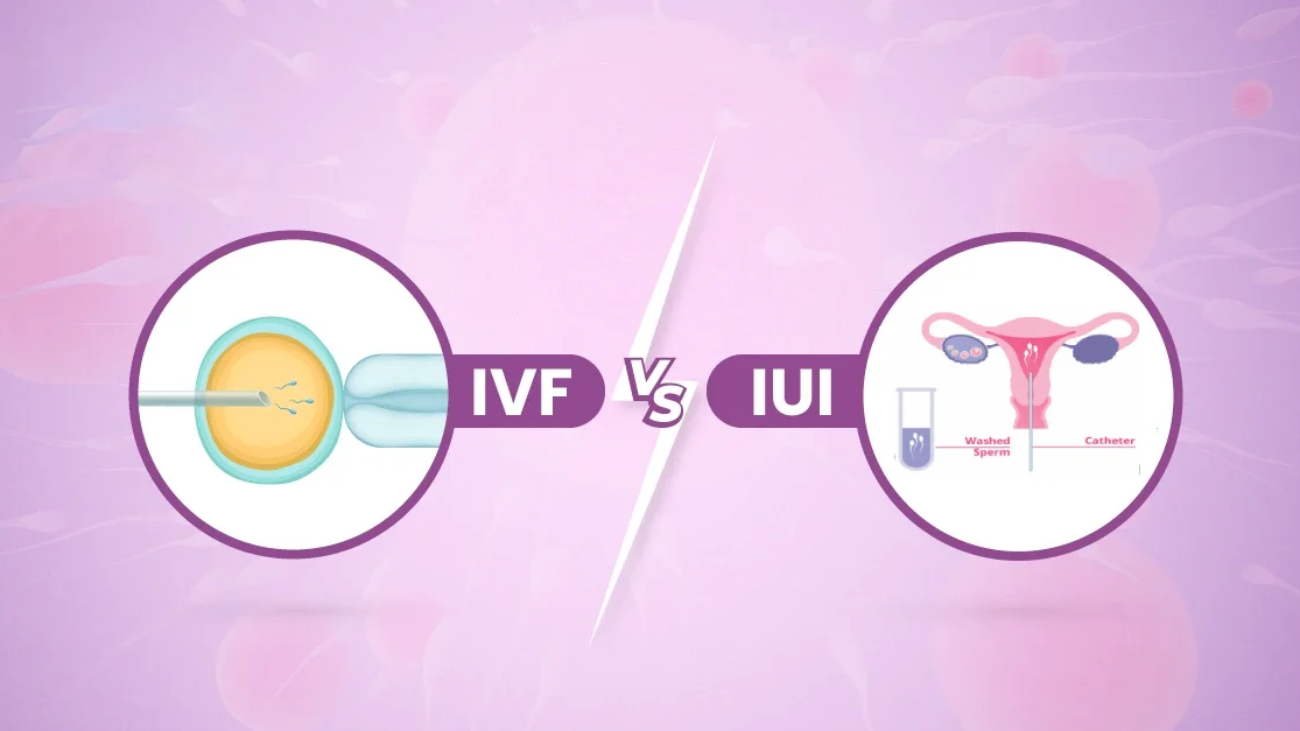
Depending on the cause, treatment may involve timing intercourse, ovulation management, medication, treatment of an underlying condition, intrauterine insemination (IUI), IVF or other approaches.
10 Signs You May Need a Fertility Specialist
1. You Have Been Trying to Conceive for 12 Months Without Pregnancy
If you are younger than 35 and have been having regular unprotected intercourse for 12 months without achieving pregnancy, it is reasonable to seek a fertility evaluation.
You do not need to keep waiting indefinitely.
A fertility specialist can investigate possible causes and determine whether further treatment is needed.
Why this matters
Fertility is influenced by both partners, and some causes of infertility may not produce obvious symptoms.
A fertility evaluation can therefore identify potential problems even when you otherwise feel healthy.
2. You Are 35 or Older and Have Been Trying for 6 Months
Female fertility generally declines with age, particularly because ovarian reserve and egg quality decrease over time.
For women aged 35 or older, professional organizations recommend considering evaluation after 6 months of trying rather than waiting a full year.
For women over 40, speaking with a fertility specialist sooner may be appropriate.
This does not mean pregnancy is impossible after 35.
It means that time becomes a more important factor in fertility planning.
3. Your Periods Are Very Irregular or You Do Not Get Periods
Your menstrual cycle can provide useful information about ovulation.
Very irregular, widely spaced or absent periods may indicate that ovulation is not occurring regularly.
Possible causes include:
- PCOS
- Thyroid disorders
- Hormonal imbalance
- Significant weight changes
- Excessive exercise
- Certain medical conditions
- Perimenopause
If you rarely know when your next period will arrive, it may also be difficult to predict your fertile window.
A fertility specialist can evaluate whether you are ovulating and investigate why your cycles are irregular.
4. You Have PCOS and Are Having Difficulty Conceiving
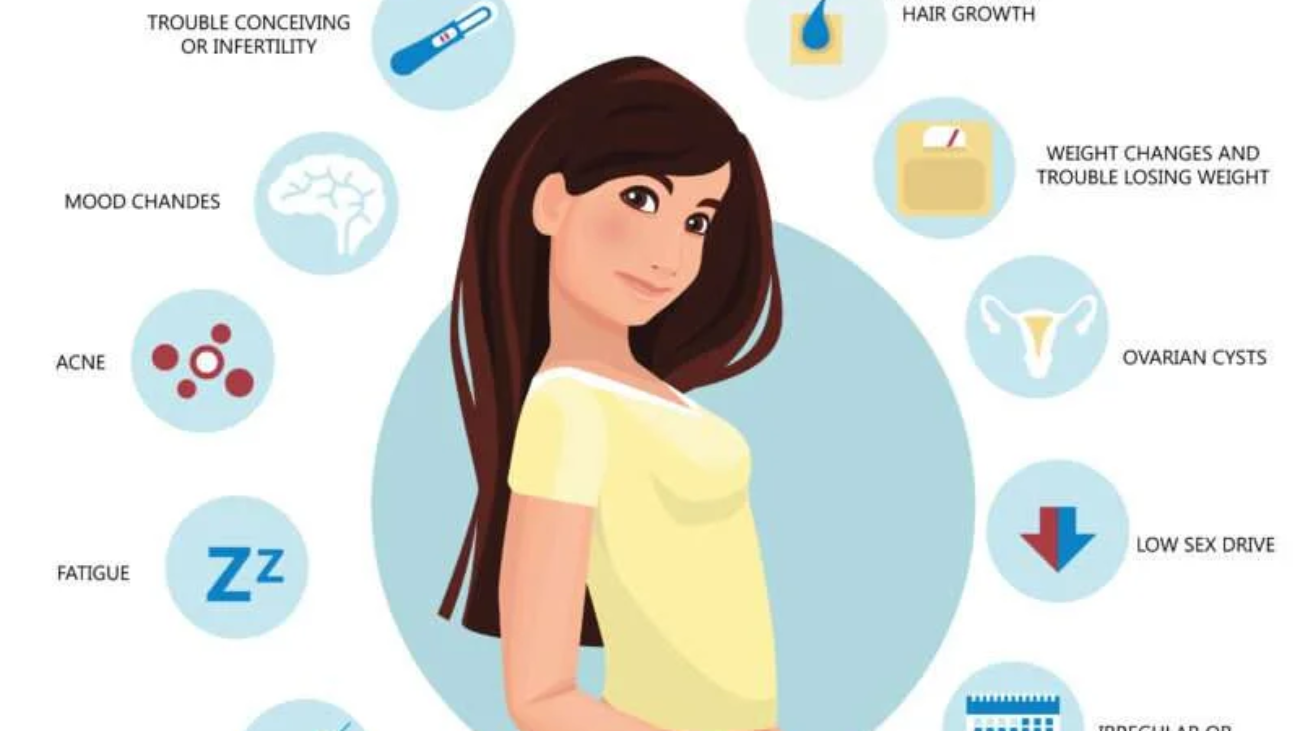
PCOS is one of the common conditions associated with irregular ovulation.
Women with PCOS may experience:
- Irregular periods
- Delayed periods
- Acne
- Excess facial or body hair
- Scalp hair thinning
- Difficulty predicting ovulation
Having PCOS does not mean you cannot become pregnant.
Many women with PCOS conceive naturally or with appropriate fertility treatment.
However, if you are trying to conceive and your cycles are irregular, a fertility consultation can help determine whether you are ovulating regularly and what treatment options may be appropriate.
5. You Have Severe Period Pain or Suspected Endometriosis
Severe menstrual pain should not always be dismissed as “normal period pain.”
Endometriosis can cause:
- Severe period pain
- Chronic pelvic pain
- Pain during sex
- Pain while passing stool
- Pain while urinating during periods
- Heavy or irregular periods
- Difficulty conceiving
Endometriosis is associated with infertility in some women, although many women with endometriosis can still become pregnant.
If you have severe period pain and are trying to conceive, discussing your symptoms with a gynecologist or fertility specialist may be appropriate.
6. You Have Experienced Two or More Pregnancy Losses
Pregnancy loss can be emotionally difficult, and repeated pregnancy losses deserve medical evaluation.
If you have experienced repeated miscarriages, your doctor may investigate possible causes involving:
- Chromosomal factors
- Uterine abnormalities
- Hormonal conditions
- Thyroid disorders
- Blood-clotting or other medical conditions
- Other reproductive factors
The exact evaluation depends on your medical and pregnancy history.
If you have experienced recurrent pregnancy loss, you do not necessarily need to “just try again” without understanding whether further evaluation is appropriate.
7. You Have Had Previous Pelvic or Reproductive Surgery
Previous surgery involving the:
- Ovaries
- Fallopian tubes
- Uterus
- Pelvis
- Abdomen
may sometimes affect fertility.
Certain procedures can lead to scarring or changes that may influence the reproductive organs.
If you have undergone previous pelvic surgery and are planning pregnancy, discussing your reproductive history with a gynecologist or fertility specialist can help determine whether an evaluation is appropriate.
8. Your Partner Has a Known or Suspected Fertility Problem
Fertility is a couple’s health issue, not just a woman’s health issue.
Male factors can contribute to difficulty conceiving.
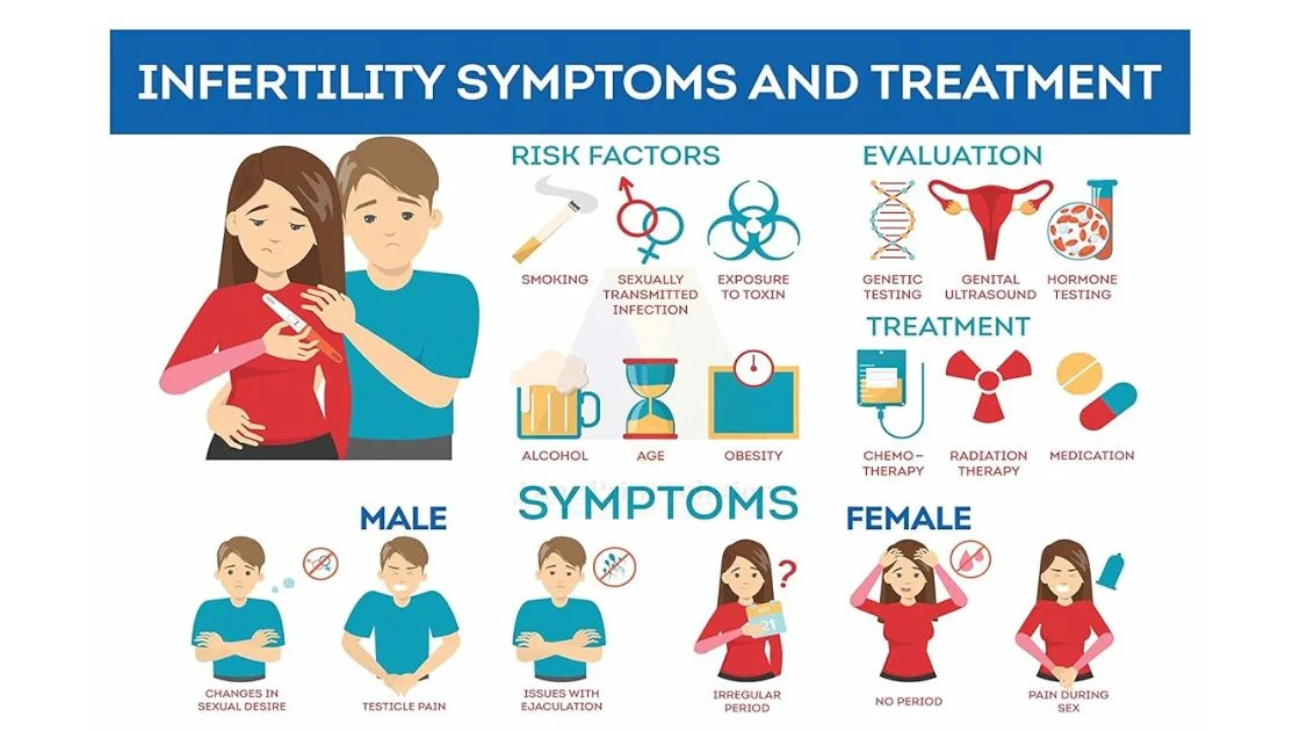
Potential male fertility factors include:
- Low sperm count
- Poor sperm motility
- Abnormal sperm morphology
- Previous testicular surgery
- Certain infections
- Hormonal conditions
- Erectile or ejaculation problems
- Certain medications or treatments
A semen analysis is commonly used as part of the evaluation when male-factor infertility is suspected.
This is why fertility evaluation often involves both partners.
9. You Have Concerns About Your Ovarian Reserve
Ovarian reserve refers to the remaining supply of eggs in the ovaries.
Age is one of the most important factors affecting fertility, but ovarian reserve can vary between individuals.
A doctor may consider tests such as:
- AMH
- Antral follicle count
- Other hormone testing
However, ovarian reserve tests should not be interpreted as a simple “fertility score.”
A low AMH does not automatically mean pregnancy is impossible, and a normal AMH does not guarantee natural conception.
Your fertility specialist should interpret the results alongside your age, menstrual history and overall reproductive health.
10. You Simply Feel Something May Not Be Right
You do not have to wait until every possible warning sign appears.
You may want to discuss fertility with a specialist if you have concerns about:
- Your age
- Your menstrual cycles
- Previous pregnancies
- Previous reproductive surgery
- PCOS
- Endometriosis
- Ovarian reserve
- Your partner’s fertility
- Family history
- Previous fertility treatment
A fertility consultation does not mean you have to start IVF.
Sometimes the most useful first step is simply understanding where you currently stand.
When Should You See a Fertility Specialist by Age?
Under 35
If you have regular unprotected intercourse and have not conceived after 12 months, fertility evaluation is generally recommended.
Earlier evaluation may be appropriate if you have irregular periods, known reproductive conditions or other fertility risk factors.
Age 35–39
If pregnancy has not occurred after 6 months of trying, consider a fertility evaluation.
Because fertility can decline with age, delaying evaluation unnecessarily may reduce the time available to explore treatment options.
Age 40 and Above
Consider discussing your fertility sooner rather than waiting several months.
ACOG recommends that women over 40 talk with their obstetrician-gynecologist about an evaluation and possible treatment sooner.
Do You Need IVF If You See a Fertility Specialist?
No.
This is one of the biggest misconceptions about fertility clinics.
Seeing a fertility specialist does not automatically mean IVF.
Depending on the cause of difficulty conceiving, treatment may include:
Lifestyle and Timing
Understanding the menstrual cycle and fertile window may be sufficient for some couples.
Ovulation Management
If ovulation is irregular, medication may sometimes be used to help induce or regulate ovulation.
IUI
Intrauterine insemination may be considered in selected circumstances.
IVF
In vitro fertilization may be recommended when appropriate based on factors such as blocked fallopian tubes, certain male-factor infertility, reduced ovarian reserve, age, previous treatment outcomes or other clinical circumstances.
The right treatment depends on the individual couple.
What Tests Might a Fertility Specialist Recommend?
There is no single fertility test that can explain every case.
Depending on your situation, evaluation may include:
For Women
- Menstrual and ovulation history
- Blood tests
- Hormonal evaluation
- Ovarian reserve assessment
- Pelvic ultrasound
- Assessment of the uterus
- Fallopian tube evaluation when appropriate
For Men
- Semen analysis
- Medical and reproductive history
- Hormonal or other testing when indicated
The exact investigations should be selected based on your symptoms, history, age and clinical examination.
How Do You Prepare for Your First Fertility Consultation?
Bring information about:
- Your menstrual cycle
- Date of your last period
- Previous pregnancies
- Previous miscarriages
- Previous fertility treatments
- Previous surgeries
- Medical conditions
- Current medications
- Previous ultrasound or blood-test reports
- Your partner’s relevant medical history
If you use a period-tracking app, you can also bring your cycle information.
You may want to write down your questions before the appointment.
Questions to Ask a Fertility Specialist
Consider asking:
What could be affecting our fertility?
Do both partners need testing?
Am I ovulating regularly?
Should I have my ovarian reserve assessed?
Do I need a fallopian tube evaluation?
Does my age affect our treatment options?
Could PCOS or endometriosis be affecting conception?
What are our treatment options before IVF?
How long should we try a particular treatment?
When would IVF be recommended?
These questions can make your consultation more productive and help you understand the reasoning behind your treatment plan.
Fertility and Gen Z: Should You Wait Until Your 30s to Think About Fertility?
There is no requirement to actively pursue pregnancy early in adulthood.
However, reproductive health awareness is different from actively trying to conceive.
For Gen Z and young adults, fertility awareness may simply mean understanding:
- Whether periods are regular
- Whether there are symptoms of PCOS
- Whether severe period pain needs evaluation
- Whether there is a history of endometriosis
- How age can influence fertility
- What contraception does and does not do
- When fertility preservation might be worth discussing
Social media can sometimes create unrealistic expectations about fertility.
Neither “you must have children young” nor “fertility will always be exactly the same” is an accurate message.
The useful approach is informed reproductive planning based on your individual circumstances.
Can Celebrities and Influencers Affect Fertility Expectations?
Social media and celebrity pregnancy stories can create misleading comparisons.
A celebrity announcing a pregnancy at 40, 42 or later does not tell you what her individual fertility circumstances were.
Similarly, becoming pregnant quickly in your 20s does not guarantee that everyone of the same age will have the same experience.
Fertility is individual.
Factors such as age, ovarian reserve, ovulation, sperm health, fallopian tubes, uterine health and underlying medical conditions can all influence conception.
Your fertility journey should be based on your health, not someone else’s Instagram timeline.
When Should Couples Seek Fertility Help Instead of Waiting?
The traditional “wait 12 months” rule is not appropriate for every couple.
Earlier evaluation can make sense when there is:
- Irregular or absent menstruation
- Known PCOS
- Suspected endometriosis
- Previous pelvic surgery
- Previous chemotherapy or radiation
- Known ovarian or uterine problems
- Recurrent pregnancy loss
- Known sperm problems
- Sexual or ejaculation difficulties
- Age-related fertility concerns
ACOG recommends fertility evaluation based on age and circumstances rather than applying one waiting period to everyone.
Frequently Asked Questions About Fertility Specialists
How long should you try to get pregnant before seeing a fertility specialist?
If you are under 35, evaluation is generally recommended after 12 months of trying without pregnancy. If you are 35 or older, consider evaluation after 6 months. Women over 40 may benefit from earlier evaluation.
Should I see a fertility specialist if my periods are irregular?
Yes, especially if irregular periods are persistent or you are trying to conceive. Irregular periods can sometimes indicate irregular ovulation.
Is 35 too late to have a baby?
No. Many women become pregnant after 35. However, fertility generally declines with age, so it may be sensible to seek evaluation sooner if pregnancy does not occur.
Should I see a fertility specialist at 40?
It can be appropriate to seek fertility advice sooner rather than waiting many months, particularly if you are actively trying to conceive. ACOG recommends discussing evaluation and treatment options with an obstetrician-gynecologist for women over 40.
Can PCOS cause infertility?
PCOS can affect ovulation and therefore make conception more difficult for some women. However, PCOS does not mean that pregnancy is impossible.
Can endometriosis affect fertility?
Endometriosis can be associated with difficulty conceiving in some women. If you have symptoms of endometriosis and are trying to conceive, discuss them with your gynecologist or fertility specialist.
Does low AMH mean I cannot get pregnant?
No. AMH is one marker used to assess ovarian reserve, but it is not a standalone test that determines whether natural pregnancy is possible.
Does IVF guarantee pregnancy?
No fertility treatment can guarantee pregnancy. Success depends on several factors, including age, reproductive health, embryo factors and the underlying cause of infertility.
Does the man need fertility testing too?
Often, yes. Male factors can contribute to difficulty conceiving, so evaluation may involve both partners. A semen analysis is a common initial test for male fertility.
Is seeing a fertility specialist the same as starting IVF?
No. A fertility specialist first evaluates the possible causes of difficulty conceiving and discusses appropriate options. IVF is only one possible treatment.
Can I see a fertility specialist even if I have not tried for a year?
Yes. The 12-month guideline mainly applies to women under 35 without known risk factors. Earlier evaluation can be appropriate when there are menstrual irregularities, known reproductive conditions, recurrent pregnancy loss, male-factor concerns or age-related considerations.
When Should You Seek Fertility Advice?
You do not need to wait until you feel that something is seriously wrong.
If you have been trying to conceive without success, have irregular periods, have a reproductive health condition, are concerned about your age or have a history that may affect fertility, speaking with a fertility specialist can provide clarity.
A consultation is an evaluation, not a commitment to IVF.
The earlier the cause is understood when evaluation is indicated, the more informed your options can be.
Fertility Consultation in Chandigarh, Zirakpur, Mohali and Panchkula
Dr. Nitasha Gupta provides gynecology, fertility and IVF consultations for women and couples seeking guidance on conception, infertility, PCOS, irregular periods and other reproductive health concerns.
Patients from Chandigarh, Zirakpur, Mohali, Panchkula, Dhakoli and Dera Bassi can seek a personalized fertility consultation based on their medical history, age and reproductive goals.
Ready to Understand Your Fertility Options?
If you have been trying to conceive or have concerns about your reproductive health, schedule a consultation with Dr. Nitasha Gupta to discuss your next steps.
Medical Disclaimer
This article is for general educational purposes and does not replace an individual consultation, diagnosis or treatment plan. Fertility concerns can have different causes, and evaluation should be personalized according to age, medical history, reproductive history and the circumstances of both partners.
Trusted Medical References
American College of Obstetricians and Gynecologists (ACOG) — Evaluating Infertility.
https://www.acog.org/womens-health/faqs/evaluating-infertility
American Society for Reproductive Medicine (ASRM) — Fertility evaluation guidance.
https://www.asrm.org/
NHS — Infertility diagnosis and treatment.
https://www.nhs.uk/conditions/infertility/