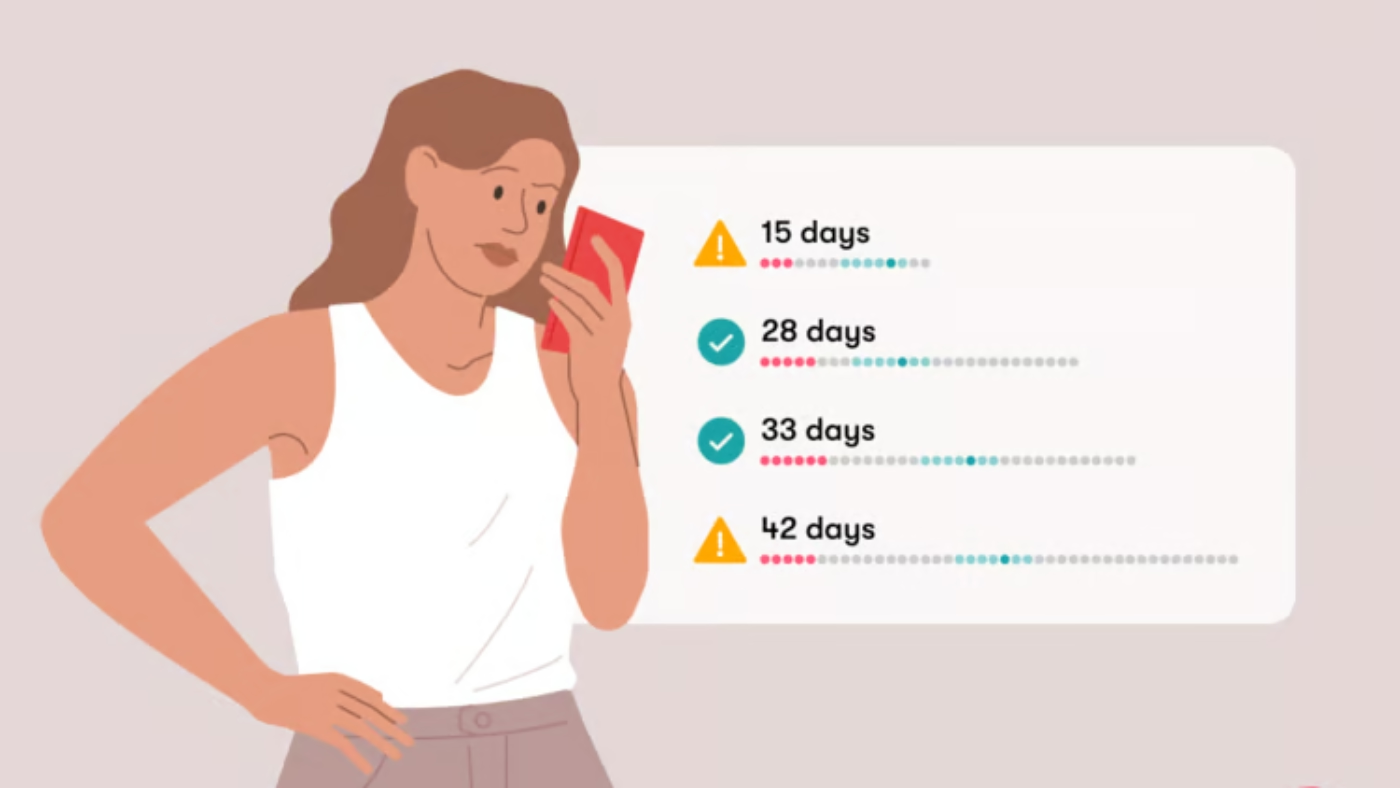
Irregular periods are common, but if you are trying to get pregnant, changes in your menstrual cycle can sometimes make conception more difficult. This is because irregular periods may be associated with irregular ovulation, meaning an egg may not be released consistently each month.
If your periods are unpredictable and you are having difficulty getting pregnant, you may wonder: Can I conceive naturally with irregular periods? Am I ovulating? Could PCOS be the reason? When should I see a gynecologist or fertility specialist?
The answer depends on the cause of your irregular periods, your age, how long you have been trying to conceive and your overall reproductive health.
Dr. Nitasha Gupta, an experienced IVF Specialist and Gynecologist in Zirakpur, provides personalised evaluation for irregular periods, PCOS, ovulation concerns and fertility problems for women from Zirakpur, Chandigarh, Panchkula, Mohali, Dhakoli, Dera Bassi and nearby areas.
Quick Answer: Can You Get Pregnant With Irregular Periods?
Yes, it is possible to get pregnant with irregular periods.
However, irregular menstrual cycles can sometimes indicate that ovulation is not occurring regularly. If ovulation is unpredictable, identifying your fertile window can become more difficult and you may have fewer opportunities to conceive.
Irregular periods do not automatically mean you are infertile or that you will need IVF.
The underlying cause matters.
Conditions such as PCOS, thyroid disorders, hormonal imbalances, changes in body weight, stress and other health factors may affect menstrual regularity and ovulation.
If you are trying to conceive and your periods are consistently irregular, consulting a gynecologist or fertility specialist can help identify the possible cause and determine whether treatment is required.
What Are Irregular Periods?
A menstrual cycle is counted from the first day of one period to the first day of the next.
Cycle length can vary between individuals. An occasional variation does not necessarily indicate a fertility problem.
However, periods may be considered irregular when menstrual cycles are consistently unpredictable, occur very frequently, are widely spaced apart or are absent for extended periods.
You should consider discussing your menstrual cycle with a gynecologist if:
- Your periods are consistently unpredictable.
- You frequently miss periods.
- You go several months without menstruating.
- Your cycle pattern has changed significantly.
- You have irregular periods along with difficulty conceiving.
- You experience symptoms such as excessive facial hair, persistent acne or other possible signs of hormonal imbalance.
A medical evaluation can help determine whether an underlying condition may be affecting your menstrual cycle.
Why Can Irregular Periods Make It Difficult to Get Pregnant?
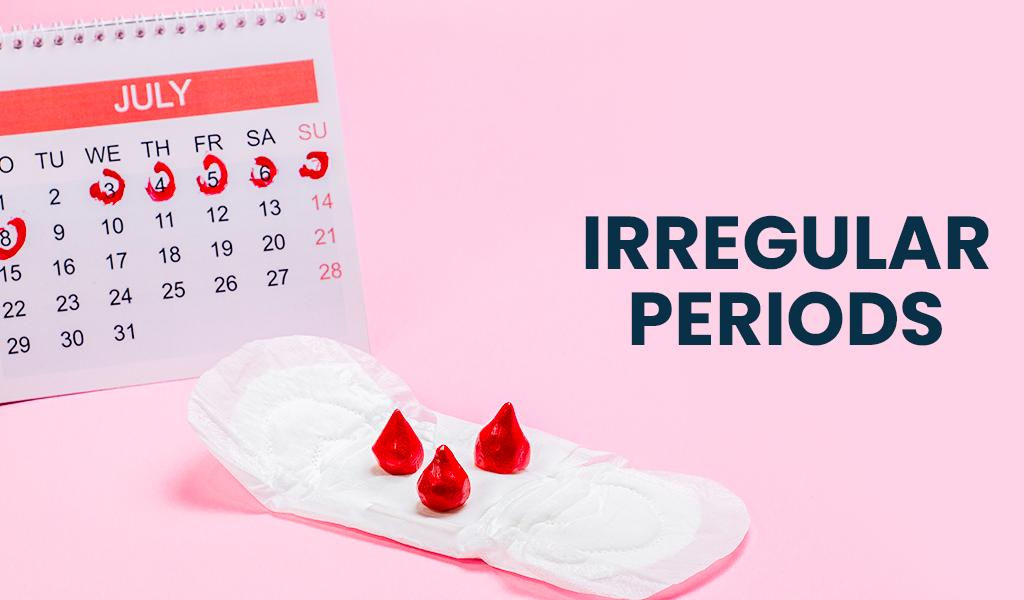
To become pregnant naturally, an egg generally needs to be released from the ovary through a process called ovulation.
When menstrual cycles are regular, ovulation may be easier to predict.
With irregular cycles, ovulation may occur at unpredictable times or, in some cases, may not occur during certain cycles.
This can affect fertility in two important ways.
First, it may be difficult to identify the fertile window and time intercourse around ovulation.
Second, if ovulation is occurring infrequently, there may be fewer opportunities for fertilisation.
However, irregular periods alone cannot determine whether you can or cannot become pregnant.
A proper evaluation is needed to understand whether you are ovulating and whether any other female or male fertility factors are involved.
What Causes Irregular Periods When Trying to Conceive?
There are several possible reasons for irregular menstrual cycles. The cause can vary significantly from one woman to another.
PCOS and Irregular Ovulation
Polycystic ovary syndrome, commonly known as PCOS, is one condition that can be associated with irregular menstrual cycles and ovulation problems.
Women with PCOS may experience:
- Irregular or infrequent periods
- Difficulty predicting ovulation
- Acne
- Increased facial or body hair
- Weight-related concerns in some cases
- Difficulty conceiving due to irregular ovulation
Not every woman with irregular periods has PCOS, and not every woman with PCOS will experience infertility.
Many women with PCOS can become pregnant naturally or with appropriate medical support.
If you have irregular periods and suspect PCOS, a gynecological evaluation can help determine whether PCOS or another condition may be affecting your menstrual cycle.
Thyroid and Hormonal Conditions
Thyroid disorders and other hormonal conditions can sometimes affect menstrual regularity and ovulation.
If your doctor suspects a hormonal cause, blood tests may be recommended based on your symptoms and medical history.
Changes in Body Weight
Significant changes in body weight can sometimes affect hormonal balance and menstrual cycles.
Both substantial weight loss and weight gain may influence ovulation in some individuals.
Your doctor can assess whether weight-related or metabolic factors may be contributing to changes in your cycle.
Stress and Lifestyle Factors
Physical or psychological stress may influence menstrual patterns in some women.
However, persistent irregular periods should not automatically be attributed to stress without appropriate medical evaluation, particularly when you are trying to conceive.
Other Reproductive or Medical Conditions
Other medical and reproductive conditions may also contribute to menstrual irregularities.
This is why self-diagnosing the cause of irregular periods based only on symptoms or information found online may not provide an accurate answer.
A gynecologist can evaluate your individual symptoms, menstrual history and reproductive health to identify the possible cause.
How Do I Know If I Am Ovulating With Irregular Periods?
Ovulation can be more difficult to predict when menstrual cycles are irregular.
Some women use ovulation predictor kits, cycle tracking applications, cervical mucus changes or basal body temperature to estimate their fertile window.
However, these methods may be less predictable when cycles vary significantly.
If there is concern about irregular ovulation, your doctor may recommend appropriate evaluation based on your medical history.
What Tests Can Check Ovulation?
Depending on your individual situation, a fertility or gynecological evaluation may include:
- Review of your menstrual cycle history
- Hormonal blood tests when clinically indicated
- Ultrasound assessment
- Ovulation monitoring
- Ovarian reserve assessment in selected cases
- Additional investigations based on symptoms and medical history
Not every woman requires every test.
Testing should be individualised rather than following the same checklist for every patient.
When Should You See a Gynecologist for Irregular Periods?
You do not necessarily need to wait until you have been trying to conceive for a full year if your menstrual cycles are significantly irregular or absent.
Consider consulting a gynecologist earlier if:
- Your periods are consistently irregular.
- You frequently skip periods.
- You have not had a period for several months.
- You have symptoms that may suggest PCOS.
- Your menstrual pattern has changed significantly.
- You have irregular periods and are actively trying to conceive.
- You have other known reproductive health concerns.
A gynecologist can assess the possible cause of your irregular cycles and determine whether further fertility evaluation is appropriate.
If you are looking for personalised women’s healthcare, learn more about consulting a Gynecologist in Zirakpur:
https://www.drnitashagupta.com/gynecologist-in-zirakpur/
Patients travelling from Chandigarh can also explore:
https://www.drnitashagupta.com/gynecologist-in-chandigarh/
When Should You See a Fertility Specialist?
General fertility guidance recommends considering an infertility evaluation after 12 months of regular unprotected intercourse without conception for women under 35 and after approximately 6 months for women aged 35 and above.
However, earlier evaluation may be appropriate when there is a known condition that may affect fertility, including irregular or absent menstrual cycles.
You may consider seeing a fertility specialist earlier if you have irregular periods and are concerned that you may not be ovulating regularly.
The purpose of an early consultation is not necessarily to begin fertility treatment immediately. It is to understand whether an underlying condition is affecting ovulation or conception.
Can PCOS Cause Infertility?
PCOS can make it more difficult for some women to conceive because it may interfere with regular ovulation.
However, having PCOS does not mean that pregnancy is impossible.
Many women with PCOS conceive naturally, while others may benefit from lifestyle changes, treatment of underlying metabolic or hormonal concerns, ovulation induction or other fertility treatments depending on their individual situation.
The appropriate approach depends on factors including:
- Age
- Ovulation pattern
- Duration of infertility
- Ovarian reserve
- Fallopian tube health
- Male fertility factors
- Previous pregnancy history
- Overall reproductive health
Treatment should therefore be personalised rather than based solely on a PCOS diagnosis.
Do Irregular Periods Mean I Need IVF?
No.
Irregular periods alone do not mean that IVF is necessary.
If irregular ovulation is identified as the primary fertility concern, there may be other treatment approaches depending on the underlying cause and the couple’s overall fertility evaluation.
Possible options may include:
- Lifestyle modifications when appropriate
- Treatment of an underlying hormonal condition
- Ovulation monitoring
- Ovulation induction in selected patients
- Timed intercourse
- IUI in appropriate situations
- IVF when medically indicated
Your fertility specialist will consider your complete reproductive health before recommending treatment.
IVF is one of several fertility treatment options and should be recommended based on individual medical indications.
To learn more about available fertility treatments and IVF, visit:
https://www.drnitashagupta.com/ivf-treatment-chandigarh/
What Other Fertility Factors Should Be Checked?
When pregnancy is not occurring, irregular periods may be one part of the fertility picture, but they may not be the only factor.
A complete fertility evaluation may consider:
Female Fertility Factors
These may include:
- Ovulation
- Ovarian reserve
- Fallopian tube health
- Uterine factors
- Endometriosis
- Age-related fertility changes
- Other reproductive conditions
Male Fertility Factors
Male fertility factors can also contribute to difficulty conceiving.
Depending on the couple’s medical and reproductive history, semen analysis or further evaluation may be recommended.
Evaluating both partners when appropriate can help provide a more complete understanding of why conception may be taking longer than expected.
Can You Get Pregnant Naturally With PCOS and Irregular Periods?
Yes. Natural pregnancy may still be possible for women with PCOS and irregular menstrual cycles.
The likelihood depends on whether and how frequently ovulation is occurring, as well as other female and male fertility factors.
Some women with PCOS ovulate occasionally and conceive naturally. Others may require medical support to improve or induce ovulation.
A fertility evaluation can help determine the most appropriate approach for your individual situation.
Gynecologist for Irregular Periods and PCOS in Zirakpur
If you are experiencing irregular periods, suspected PCOS or difficulty getting pregnant, consulting a gynecologist can help identify the underlying cause.
Dr. Nitasha Gupta provides personalised gynecology and fertility consultations in Zirakpur for women experiencing menstrual irregularities, PCOS, ovulation concerns and fertility problems.
Patients from Dhakoli, Peer Muchalla, Baltana, Dera Bassi and surrounding areas can seek evaluation based on their individual symptoms and reproductive goals.
Learn more about women’s healthcare and gynecology services in Zirakpur:
https://www.drnitashagupta.com/gynecologist-in-zirakpur/
Gynecologist and Fertility Consultation for Patients From Chandigarh
Women from Chandigarh experiencing irregular periods or difficulty conceiving can also consult Dr. Nitasha Gupta for gynecological and fertility evaluation.
The aim of the consultation is to understand the possible cause of menstrual irregularities and determine whether they may be affecting ovulation or fertility.
Learn more:
https://www.drnitashagupta.com/gynecologist-in-chandigarh/
Fertility and Women’s Health Care Across the Tricity Region
Dr. Nitasha Gupta provides fertility, IVF and gynecology consultations for patients from:
- Zirakpur
- Chandigarh
- Panchkula
- Mohali
- Dhakoli
- Peer Muchalla
- Baltana
- Dera Bassi
- Nearby areas
Patients experiencing irregular periods, PCOS, difficulty conceiving or other reproductive health concerns can seek an individualised evaluation based on their medical history and symptoms.
Why Consult Dr. Nitasha Gupta?
Dr. Nitasha Gupta is an IVF Specialist and Gynecologist with more than 15 years of clinical experience in women’s reproductive health.
Her clinical focus includes:
- Irregular periods
- PCOS
- Ovulation disorders
- Infertility evaluation
- IVF and assisted reproductive care
- IUI
- Pregnancy care
- Gynecological conditions
- Laparoscopy and hysteroscopy
- Women’s health
Her approach focuses on evidence-based evaluation, personalised treatment planning and helping patients understand their reproductive health before deciding on the next step.
Frequently Asked Questions About Irregular Periods and Pregnancy
1. Can I get pregnant if my periods are irregular?
Yes. It is possible to become pregnant with irregular periods. However, irregular cycles may sometimes indicate irregular ovulation, which can make it more difficult to predict your fertile window or reduce the number of opportunities to conceive.
2. Why am I not getting pregnant if I have irregular periods?
Irregular ovulation may be one possible reason, but several other female and male fertility factors can affect conception. A fertility evaluation can help identify whether ovulation or another factor may be contributing.
3. Do irregular periods mean I am infertile?
No. Irregular periods do not automatically mean infertility. They may indicate irregular ovulation or an underlying hormonal or reproductive condition that should be evaluated.
4. How can I tell if I am ovulating with irregular periods?
Ovulation may be tracked using several methods, but irregular cycles can make prediction more difficult. If you are concerned about ovulation, a gynecologist or fertility specialist can recommend appropriate tests or monitoring based on your individual situation.
5. Can PCOS cause irregular periods and difficulty getting pregnant?
Yes. PCOS can affect regular ovulation in some women, which may lead to irregular periods and difficulty conceiving. However, many women with PCOS can become pregnant naturally or with appropriate fertility support.
6. Can I get pregnant naturally with PCOS?
Yes. Many women with PCOS can conceive naturally. Others may require medical support depending on their ovulation pattern, age and other fertility factors.
7. Do I need IVF if I have PCOS?
Not necessarily. IVF is not automatically required for women with PCOS. Treatment depends on your age, ovulation, duration of infertility and other female and male fertility factors.
8. When should I see a gynecologist for irregular periods?
Consider consulting a gynecologist if your periods are consistently irregular, frequently absent, have changed significantly or are accompanied by other symptoms. If you are trying to conceive, earlier evaluation may also be appropriate.
9. Should I see a gynecologist or fertility specialist if I am not getting pregnant?
A gynecologist with expertise in fertility or a fertility specialist can evaluate your menstrual cycles and reproductive health. The appropriate choice may depend on how long you have been trying, your age and whether you have known fertility concerns.
10. Can irregular periods be treated to help me get pregnant?
Treatment depends on the underlying cause. In some cases, treating a hormonal condition, addressing appropriate lifestyle factors or using medication to support ovulation may be considered. Your doctor can recommend treatment after evaluation.
11. Which doctor should I consult for PCOS and fertility problems in Zirakpur?
Women experiencing PCOS, irregular periods or fertility concerns can consult a qualified gynecologist or fertility specialist. Dr. Nitasha Gupta provides gynecology, PCOS and fertility consultations for patients from Zirakpur and surrounding areas.
12. When should I consult a fertility specialist in Chandigarh or Zirakpur?
If you have been trying to conceive without success for the recommended period based on your age, or if you have irregular or absent periods or another known fertility concern, you may benefit from a fertility evaluation.
Take the Next Step Towards Understanding Your Reproductive Health
Irregular periods do not automatically mean that you cannot become pregnant.
However, if your menstrual cycles are consistently unpredictable and you are trying to conceive, understanding whether you are ovulating regularly can be an important step.
A personalised gynecological and fertility evaluation can help identify possible causes of irregular periods and determine whether treatment or further fertility testing is appropriate.
If you are looking for a gynecologist in Zirakpur, a fertility specialist in Chandigarh, or personalised care for PCOS, irregular periods and difficulty conceiving, you can consult Dr. Nitasha Gupta for an individualised evaluation.
Book a Consultation with Dr. Nitasha Gupta
Call or WhatsApp: +91 98889 91413
Clinic: SCO 35, Shri Balaji Complex, Dhakoli, Zirakpur, Mohali 160104
Book an appointment:
https://www.drnitashagupta.com/contact/
Medical Disclaimer
This article is intended for general educational purposes and does not replace personalised medical advice, diagnosis or treatment. The causes of irregular periods and fertility concerns vary between individuals. Please consult a qualified healthcare professional for recommendations based on your individual medical history and reproductive health.
Medical References
- American College of Obstetricians and Gynecologists (ACOG). Polycystic Ovary Syndrome (PCOS).
https://www.acog.org/womens-health/faqs/polycystic-ovary-syndrome-pcos - American Society for Reproductive Medicine (ASRM). Fertility Evaluation of Infertile Women: A Committee Opinion.
https://www.asrm.org/practice-guidance/practice-committee-documents/fertility-evaluation-of-infertile-women-a-committee-opinion-2021/ - World Health Organization (WHO). Infertility.
https://www.who.int/news-room/fact-sheets/detail/infertility
Leave A Comment