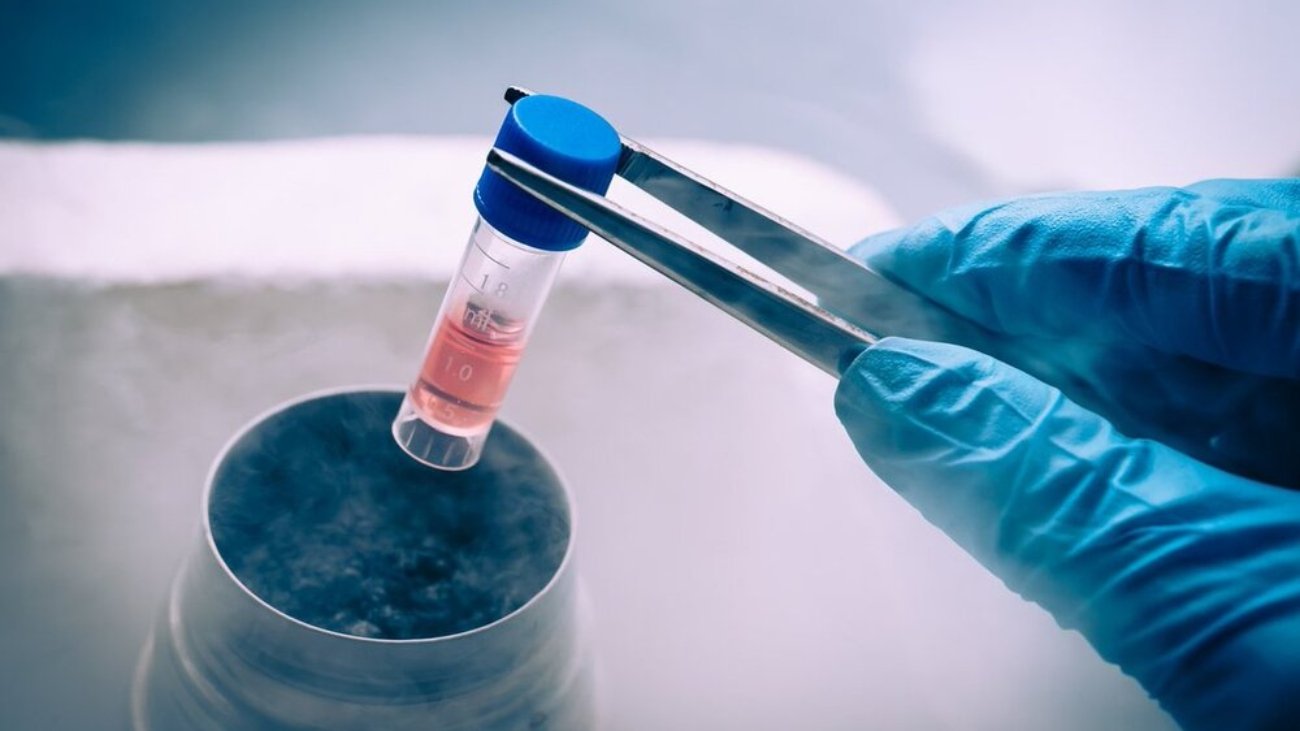
Egg freezing, medically known as oocyte cryopreservation, is a fertility preservation option that allows a woman to freeze and store her unfertilized eggs for possible use in the future.
For women who are not ready to have children now but want to preserve an option for future pregnancy, egg freezing can provide reproductive flexibility. It may also be considered when medical treatment could affect ovarian function.
However, egg freezing is not a guarantee of a future pregnancy. The age at which eggs are frozen, ovarian reserve, number of mature eggs retrieved, laboratory performance and future fertility treatment factors can all influence outcomes.
In this guide, Dr. Nitasha Gupta, Gynecologist & IVF Specialist, explains egg freezing in India, including the cost of egg freezing, best age to consider it, the complete egg freezing process, AMH testing, egg freezing success rates, risks and what women should know before making a decision.
What Is Egg Freezing?
Egg freezing is a fertility preservation procedure in which mature eggs are collected from the ovaries and frozen for potential future use.
The medical term is oocyte cryopreservation.
Unlike IVF, the eggs are not fertilized at the time of retrieval. Instead, the mature eggs are frozen and stored.
If a woman decides to use her frozen eggs later, the eggs can be thawed, fertilized with sperm in the laboratory and developed into embryos for possible transfer into the uterus.
Modern egg freezing commonly uses a rapid freezing technique called vitrification, which reduces ice-crystal formation during freezing. ASRM
Why Do Women Freeze Their Eggs?
Women may consider egg freezing for different personal or medical reasons.
These may include:
- Delaying pregnancy for personal reasons
- Career or educational plans
- Not being ready for parenthood
- Not currently having a suitable partner
- Family planning considerations
- Medical conditions that may affect fertility
- Planned treatments that could affect ovarian function
- Fertility preservation based on individual reproductive goals
The decision should be individualized after discussing age, ovarian reserve, medical history and reproductive plans with a fertility specialist.
Egg Freezing Cost in India 2026
One of the most common searches is:
“How much does egg freezing cost in India?”
The cost of egg freezing can vary significantly between fertility clinics and cities.
A typical egg-freezing treatment may involve several separate expenses:
What Can Be Included in Egg Freezing Cost?
The overall cost may include:
- Initial fertility consultation
- AMH and other hormone tests
- Ultrasound and ovarian reserve assessment
- Fertility medications
- Ovarian stimulation
- Follicular monitoring
- Trigger injection
- Egg retrieval procedure
- Sedation or anesthesia
- Laboratory processing
- Egg vitrification
- Initial cryopreservation
- Annual egg storage
Additional costs may arise later when the frozen eggs are thawed and used for IVF.
There is no single egg freezing cost in India that applies to every woman. The number of cycles required, medication requirements, clinic, laboratory services and storage arrangements can all affect the final cost.
Recent Indian reporting has placed a single egg-freezing cycle broadly around ₹1.5 lakh to ₹3 lakh or more, depending on the clinic, city, medication requirements and number of cycles. A complete written treatment estimate should clarify what is and is not included. @theweek
Does Egg Freezing Cost Include Future IVF?
Usually, women should distinguish between:
Egg freezing today
and
Using the frozen eggs in the future.
When frozen eggs are eventually used, additional treatment may involve:
- Egg thawing
- Fertilization
- ICSI when clinically indicated
- Embryo culture
- Embryo freezing if required
- Endometrial preparation
- Embryo transfer
- Pregnancy testing
Therefore, women comparing the cost of egg freezing in India should ask clinics for a complete breakdown rather than comparing only the initial package price.
What Is the Best Age to Freeze Eggs?

There is no single age that can be described as the medically perfect age for every woman.
However, age at the time of egg freezing is an important factor because both egg number and egg quality generally decline with increasing age.
Evidence reviewed by the American Society for Reproductive Medicine indicates that live-birth outcomes appear better when oocytes are cryopreserved at a younger age, although evidence is insufficient to establish one universally optimal age for planned egg freezing. ASRM
Egg Freezing in Your 20s
Women in their 20s generally have a higher proportion of chromosomally normal eggs compared with later reproductive years.
However, egg freezing is not automatically necessary simply because someone is in their 20s.
The decision should consider:
- Family planning timeline
- Personal circumstances
- Ovarian reserve
- Medical history
- Future reproductive plans
Egg Freezing in Your Early 30s
For women considering fertility preservation, the early 30s can be an important time to discuss ovarian reserve and future reproductive plans.
An individual assessment can help determine whether egg freezing is appropriate.
Egg Freezing After 35
Egg freezing can still be performed after 35, but age-related changes in egg quality can affect future reproductive outcomes.
Some women may also require more than one stimulation cycle to obtain an adequate number of mature eggs.
This is why delaying the discussion until much later may reduce the available options.
The right time to consider egg freezing is individual rather than determined by age alone.
Egg Freezing Process: Step-by-Step
The egg freezing process is similar to the ovarian stimulation and egg-retrieval stages of an IVF cycle.
Step 1 — Fertility Consultation and Assessment
The first step is a detailed fertility assessment.
Depending on the individual situation, this may include:
- Medical history
- Menstrual history
- AMH testing
- Other hormone tests
- Transvaginal ultrasound
- Antral follicle count
- Ovarian reserve assessment
These tests help the fertility specialist estimate how the ovaries may respond to stimulation.
Step 2 — Ovarian Stimulation
Fertility medications are used to stimulate the ovaries to develop multiple follicles during one menstrual cycle.
The ovaries normally mature one dominant egg during a natural cycle.
During egg freezing, the objective is to stimulate multiple follicles so that several mature eggs may potentially be retrieved.
Treatment generally involves approximately 10–14 days of stimulation and monitoring, although the exact duration varies between patients. HFEA
Step 3 — Ultrasound and Hormone Monitoring
During stimulation, the fertility team monitors follicular development.
Monitoring may include:
- Ultrasound scans
- Estradiol or other hormone measurements
- Follicle-size assessment
- Medication adjustments when required
The objective is to determine when the follicles are ready for final maturation.
Step 4 — Trigger Injection
Once the follicles reach the appropriate stage, a trigger medication is administered to help the eggs complete their final maturation.
The timing of the trigger is important because egg retrieval is scheduled according to the response.
Step 5 — Egg Retrieval
Egg retrieval is generally performed using ultrasound guidance.
A thin needle is used to collect fluid containing eggs from the ovarian follicles.
The procedure is generally performed under sedation or anesthesia, depending on the clinical setting and protocol.
Step 6 — Egg Assessment
The embryology laboratory evaluates the retrieved eggs.
Only mature eggs suitable for cryopreservation are generally frozen.
The number of eggs retrieved and the number that are mature can vary between women and between cycles.
Step 7 — Vitrification and Storage
Mature eggs are rapidly frozen using vitrification and stored under cryogenic conditions.
Vitrification has become an important advancement in oocyte cryopreservation because rapid cooling helps minimize ice-crystal formation. ASRM
How Many Eggs Should You Freeze?
This is one of the most important questions women ask:
“How many eggs should I freeze?”
There is no universally guaranteed number of eggs that will result in a baby.
The number required depends on several factors, including:
- Age when eggs are frozen
- Number of mature eggs retrieved
- Egg quality
- Laboratory performance
- Future age at treatment
- Whether one or more treatment cycles are required
ASRM states that there is currently insufficient evidence to provide every woman with a specific number of eggs that guarantees a reasonable probability of live birth after planned egg freezing. ASRM
Therefore, online calculators should not replace individualized fertility counselling.
Egg Freezing Success Rate: What Does the Evidence Say?
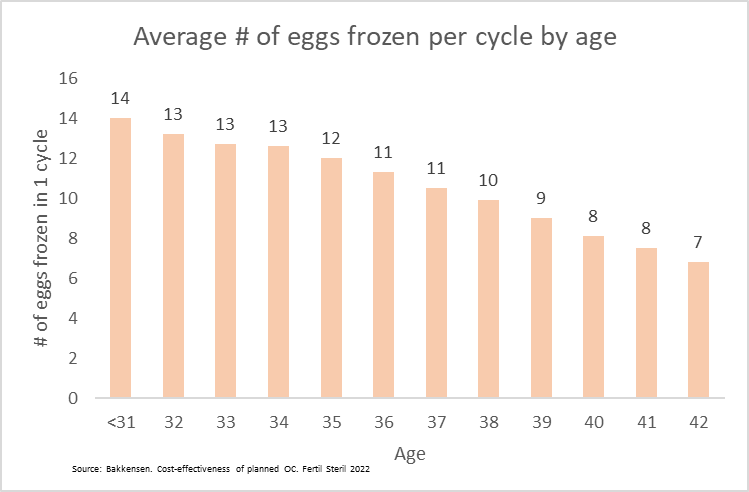
Searching for “egg freezing success rate” can be confusing because several different outcomes can be described as success.
These include:
- Egg survival after thawing
- Fertilization rate
- Embryo development
- Implantation
- Clinical pregnancy
- Live birth
These are not the same thing.
Does Egg Freezing Guarantee Pregnancy?
No.
Egg freezing preserves eggs; it does not guarantee that a future pregnancy or live birth will occur.
The HFEA similarly emphasizes that egg freezing is becoming more successful but is not a guarantee of having a baby. HFEA
The strongest predictor discussed in current evidence is the woman’s age at the time of egg freezing, although outcomes are influenced by multiple factors.
ASRM’s evidence review concluded that live-birth outcomes appear better when eggs are frozen at younger ages, but also noted that evidence remains insufficient to give an exact predicted live-birth probability for every woman undergoing planned egg freezing. ASRM
Why Age Matters for Egg Freezing
Egg quality changes with reproductive aging.
Freezing eggs at a younger age can preserve eggs from that point in time, but it does not stop the woman’s biological aging or guarantee future pregnancy.
The age of the woman when the eggs are frozen and the circumstances when the eggs are eventually used are both important considerations.
AMH Test Before Egg Freezing
An AMH test is commonly used as part of ovarian reserve assessment.
AMH can help estimate the expected ovarian response to stimulation and may help the fertility specialist plan treatment.
However:
AMH is not a guarantee of egg quality or future pregnancy.
Ovarian reserve testing is primarily useful for understanding expected egg yield rather than providing a definitive prediction of future live birth after planned egg freezing. ASRM notes that ovarian reserve testing can help estimate anticipated oocyte yield but that evidence is insufficient to use ovarian reserve testing independently to predict live birth after planned oocyte cryopreservation. ASRM
If your AMH is low, it does not automatically mean that pregnancy is impossible.
You can also read:
Low AMH Treatment in Chandigarh: Can You Get Pregnant with Low AMH?
Is Egg Freezing Safe?
Egg freezing is an established fertility-preservation technique, but like any medical procedure, it has potential risks.
Possible short-term effects of ovarian stimulation may include:
- Bloating
- Abdominal discomfort
- Breast tenderness
- Mood changes
- Headache
- Injection-site discomfort
More significant complications can occur, including ovarian hyperstimulation syndrome (OHSS), although modern stimulation protocols and monitoring can reduce risk.
Egg retrieval is also an invasive procedure and carries procedural risks.
Your fertility specialist should explain the individual benefits, limitations and risks before treatment.
Does Egg Freezing Affect Future Fertility?
Egg freezing itself is intended to preserve reproductive potential rather than reduce it.
However, the stimulation and retrieval process does not guarantee that all eggs available in the ovaries will be collected or preserved.
Women should also understand that frozen eggs are an option for future treatment, not a replacement for natural fertility.
If you are currently trying to conceive, fertility evaluation may be more appropriate than simply considering egg freezing.
For women with fertility concerns, a fertility assessment may include AMH, hormone testing, ultrasound, ovarian reserve assessment and other investigations depending on the situation.
Who May Consider Egg Freezing?
Egg freezing may be considered by women who:
- Want to delay childbearing
- Are not ready for pregnancy
- Want to preserve reproductive options
- Are planning medical treatment that could affect ovarian function
- Have concerns about age-related fertility decline
- Want to understand their fertility preservation options
The decision should be made after discussing your reproductive goals and medical history with a qualified fertility specialist.
Egg Freezing in Chandigarh, Zirakpur & Panchkula
Women searching for egg freezing in Chandigarh, egg freezing in Zirakpur or fertility preservation near Panchkula can begin with an individualized fertility assessment.
At the fertility practice associated with Dr. Nitasha Gupta, fertility evaluation can include ovarian reserve assessment, AMH testing, ultrasound monitoring and fertility counselling.
The clinic’s fertility services include cryopreservation, fertility evaluation, IVF, IUI, ICSI, hysteroscopy, laparoscopy and reproductive diagnostics, with services for patients from Zirakpur, Chandigarh, Panchkula, Mohali and nearby areas. Dr. Nitasha Gupta
You can explore:
Fertility Specialist in Chandigarh
Egg Freezing vs Embryo Freezing
Egg freezing and embryo freezing are different fertility-preservation approaches.
| Egg Freezing | Embryo Freezing |
|---|---|
| Unfertilized eggs are frozen | Fertilized eggs are developed into embryos |
| Does not require sperm at freezing | Requires sperm for fertilization |
| Preserves future reproductive options | Creates embryos that can potentially be transferred later |
| Future fertilization is required | Embryos can potentially be transferred after thawing |
| Useful when future partner/sperm source is uncertain | May be suitable when sperm is available and embryo creation is appropriate |
The most suitable option depends on age, reproductive goals, medical circumstances and personal preferences.
What Should You Ask Before Choosing an Egg Freezing Clinic?
Before starting treatment, ask the fertility clinic:
About Your Treatment
- How many mature eggs might I expect from one cycle?
- What tests will I need before stimulation?
- How will my ovarian reserve be assessed?
- How long will the stimulation process take?
- How many visits or scans will be required?
About the Laboratory
- Which freezing technology is used?
- How are frozen eggs stored?
- What are the clinic’s egg survival rates after thawing?
- What are the clinic’s fertilization and embryo-development outcomes?
- How are eggs monitored and stored?
About Cost
Ask for a written estimate covering:
- Consultation
- Testing
- Medications
- Monitoring
- Retrieval
- Sedation
- Laboratory charges
- Vitrification
- Storage
- Future thawing
- Fertilization
- Embryo transfer
ASRM specifically recommends that patients considering planned oocyte cryopreservation receive counselling about efficacy, safety, costs, benefits and risks, including the uncertainties surrounding future outcomes. ASRM
Why Choose Dr. Nitasha Gupta for Fertility & Egg Freezing Guidance?
Dr. Nitasha Gupta is a Gynecologist, IVF Specialist and Fertility Specialist providing fertility and women’s healthcare in Zirakpur and the Chandigarh region.
Her fertility services include:
- Fertility evaluation
- AMH and ovarian reserve assessment
- IVF
- IUI
- ICSI
- Cryopreservation
- Ultrasound monitoring
- Hysteroscopy
- Laparoscopy
- Recurrent pregnancy-loss evaluation
- Fertility counselling
The practice states that fertility plans are individualized according to medical history, reproductive goals, ovarian reserve and diagnostic findings. Dr. Nitasha Gupta
Evidence-Based Fertility Counselling
Egg freezing is a personal reproductive decision.
Rather than relying on a single age, AMH number or online success-rate calculator, an individualized assessment can help you understand:
- Your ovarian reserve
- Expected response to stimulation
- Potential number of eggs retrieved
- Whether egg freezing is appropriate
- Whether more than one cycle may be considered
- Expected costs
- Future fertility options
Frequently Asked Questions About Egg Freezing
H3: What is egg freezing?
Egg freezing, or oocyte cryopreservation, is a fertility-preservation procedure in which mature unfertilized eggs are collected, vitrified and stored for possible future use.
What is the egg freezing cost in India?
The cost varies by clinic, city, medication requirements, number of cycles and services included. In India, a single cycle may broadly cost around ₹1.5 lakh to ₹3 lakh or more, with medications, storage and future IVF-related treatment potentially adding to the total. @theweek
What is the best age to freeze eggs?
There is no single universally recommended age for every woman. Evidence indicates that outcomes tend to be better when eggs are frozen at younger ages, but the decision should consider age, ovarian reserve, health and reproductive goals. ASRM
Is egg freezing successful?
Egg freezing can preserve eggs for future fertility treatment, but it does not guarantee pregnancy or a live birth. Outcomes depend on factors including age at freezing, number of mature eggs, egg survival after thawing, fertilization, embryo development and other reproductive factors. ASRM
Does egg freezing guarantee a baby later?
No. Egg freezing preserves an option for future treatment but cannot guarantee a future pregnancy or live birth.
How many eggs should I freeze?
There is no universally guaranteed number. The number of eggs that may be appropriate depends on age, ovarian reserve, response to stimulation and individual reproductive goals. Current evidence is insufficient to define one number that guarantees a live birth. ASRM
How long does the egg freezing process take?
The ovarian stimulation and monitoring phase commonly takes around 10–14 days, followed by egg retrieval and vitrification. The exact timeline varies between individuals. HFEA
Is egg freezing painful?
Some women experience discomfort or bloating during ovarian stimulation. Egg retrieval is performed with sedation or anesthesia depending on the clinical protocol. Your fertility specialist can explain what to expect based on your treatment plan.
What tests are needed before egg freezing?
Assessment may include AMH testing, hormone evaluation, ultrasound and antral follicle count, along with a review of medical and reproductive history.
Can I freeze my eggs if my AMH is low?
A low AMH does not automatically mean egg freezing is impossible. It may indicate reduced ovarian reserve and potentially a lower expected egg yield. An individualized assessment is important.
Does AMH predict egg freezing success?
AMH can help estimate ovarian response and expected egg yield, but it should not be treated as a standalone predictor of future live birth after planned egg freezing. ASRM
Can I get pregnant naturally after freezing my eggs?
Egg freezing does not prevent you from attempting natural conception in the future. However, your natural fertility continues to change with age.
Is egg freezing available in India?
Egg freezing is available as a fertility-preservation option in India. The procedure should be undertaken through an appropriately regulated fertility service with appropriate counselling and laboratory facilities.
Where can I get egg freezing in Chandigarh or Zirakpur?
Women from Chandigarh, Zirakpur, Panchkula and nearby areas can discuss fertility preservation with Dr. Nitasha Gupta and undergo an individualized fertility assessment. The clinic lists cryopreservation and fertility evaluation among its services. Dr. Nitasha Gupta
Final Takeaway
Egg freezing can provide women with an additional option for preserving reproductive potential, but it should not be viewed as a guarantee of future pregnancy.
The most important factors to understand before freezing eggs are:
- Your age
- Ovarian reserve
- Expected number of mature eggs
- Egg-freezing technology
- Laboratory experience
- Total treatment and storage costs
- Future IVF requirements
- Your individual reproductive goals
If you are considering egg freezing in India, start with an individualized fertility assessment rather than relying solely on online success-rate calculators or a single AMH result.
Dr. Nitasha Gupta provides fertility evaluation, ovarian reserve assessment, cryopreservation and fertility treatment services for patients from Zirakpur, Chandigarh, Panchkula, Mohali and nearby regions.
Book a Fertility Consultation with Dr. Nitasha Gupta
Medical References & Trusted Resources
American Society for Reproductive Medicine (ASRM) — Evidence-based guidance on planned oocyte cryopreservation, age and reproductive outcomes.
ASRM: Evidence-Based Outcomes After Oocyte Cryopreservation
European Society of Human Reproduction and Embryology (ESHRE) — Female fertility preservation guideline.
ESHRE: Female Fertility Preservation Guideline
Human Fertilisation and Embryology Authority (HFEA) — Patient information on egg freezing, process, costs and outcomes.
HFEA: Egg Freezing