
What Is a Fertility Checkup?
A fertility checkup is a medical evaluation designed to understand factors that may be affecting a person’s or couple’s ability to conceive. It does not mean that you automatically need IVF or another fertility treatment.
A proper fertility evaluation usually starts with a detailed medical and reproductive history and may include blood tests, ultrasound, ovulation assessment, ovarian reserve testing and semen analysis, depending on the individual situation.
For couples, evaluating both partners can be important because fertility problems may involve female factors, male factors or a combination of both. The American Society for Reproductive Medicine recommends that, when applicable, evaluation of the male partner should begin alongside the female evaluation, including semen analysis.
At Kore Fertility Centre, Dr. Nitasha Gupta provides personalized fertility assessment for patients from Zirakpur, Chandigarh, Panchkula, Mohali, Dhakoli and Dera Bassi, with testing selected according to medical history, symptoms, age and reproductive goals. Dr. Nitasha Gupta
When Should You Consider a Fertility Checkup?
You don’t necessarily need to wait until you have been trying to conceive for a long time.
According to ACOG and ASRM, an infertility evaluation is generally considered after:
- 12 months of regular unprotected intercourse when the woman is under 35
- 6 months when the woman is 35 or older
- More immediate evaluation may be appropriate after age 40
- Earlier assessment may be appropriate when there are known or suspected fertility problems. ASRM
Earlier fertility testing may also be appropriate when there is:
- Irregular or absent periods
- Known or suspected PCOS
- Previous pelvic infection or surgery
- Endometriosis
- Recurrent pregnancy loss
- Previous fertility treatment that was unsuccessful
- Known low sperm count
- Sexual or reproductive concerns
- A history that may affect ovarian reserve
The exact timing should be decided with a qualified fertility specialist rather than based only on an online checklist.
What Tests Are Included in a Fertility Checkup?
There is no single fertility test that can determine whether someone will become pregnant.
A fertility checkup is usually a combination of clinical history, examination and targeted investigations.
The following are some of the most commonly considered areas of evaluation.
1. Medical and Reproductive History
Before ordering tests, a fertility specialist will usually want to understand your overall reproductive history.
This may include:
- Age
- How long you have been trying to conceive
- Menstrual cycle length and regularity
- Previous pregnancies
- Previous miscarriages
- Previous IUI or IVF treatment
- Previous pelvic or abdominal surgery
- History of PCOS or endometriosis
- Previous infections
- Current medications
- Family history
- Lifestyle factors
- Previous fertility reports
ASRM recommends a systematic assessment of medical, reproductive and family history as an important part of infertility evaluation. ASRM
This history helps determine which fertility tests are actually appropriate instead of ordering every possible test.
Fertility Checkup for Women
2. Hormonal Blood Tests
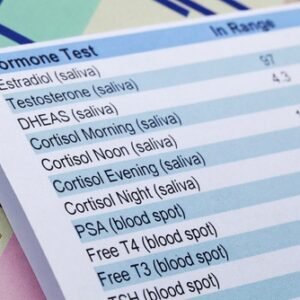 Hormonal testing may be recommended to understand ovulation, ovarian function or conditions that could affect reproductive health.
Depending on the patient’s history, testing may include:
- AMH
- FSH
- Estradiol
- TSH
- Progesterone
- Other hormone tests when clinically indicated
Not every woman needs every hormone test.
For example, ASRM notes that prolactin, progesterone and several other hormone tests should not automatically be ordered as routine infertility tests without an appropriate clinical indication.
This is why fertility testing should be personalized rather than based on a fixed package.
3. AMH Test and Ovarian Reserve Assessment
The AMH test is commonly used as part of ovarian reserve assessment.
Ovarian reserve refers broadly to the remaining quantity of eggs available in the ovaries. AMH can help a fertility specialist understand ovarian reserve and may assist in planning fertility treatment.
However, an important distinction is often missed online:
AMH is not a pregnancy test and does not by itself predict whether you will become pregnant naturally.
ASRM describes ovarian reserve testing as an adjunct to fertility evaluation and treatment planning rather than a standalone screening test for future fertility in women who do not meet criteria for infertility evaluation.
Depending on the situation, ovarian reserve assessment may also involve:
- Antral follicle count
- FSH
- Estradiol
- Transvaginal ultrasound
4. Ovulation Testing
Ovulation is important because an egg needs to be released for natural conception to occur.
Ovulation assessment may involve:
- Menstrual history
- Ovulation predictor kits
- Progesterone testing in selected situations
- Ultrasound monitoring
- Follicular monitoring
Women with regular menstrual cycles may not require extensive ovulation testing unless there are additional concerns. ASRM notes that menstrual history can often provide useful information about ovulatory patterns.
Women with irregular or absent periods may require additional investigation to understand why ovulation is not occurring regularly.
5. Transvaginal Ultrasound
A transvaginal ultrasound allows the fertility specialist to examine the uterus and ovaries and can help identify findings such as:
- Fibroids
- Ovarian cysts
- Endometrial polyps
- Adenomyosis
- Ovarian follicles
- Antral follicle count
- Other pelvic abnormalities
Ultrasound may also be used for follicular monitoring, particularly during fertility treatment or when ovulation needs to be assessed.
ASRM considers ultrasound an important imaging tool for assessing uterine anatomy, ovaries and surrounding reproductive structures
6. Fallopian Tube Testing
The fallopian tubes play an important role in natural conception because they provide the pathway through which sperm and egg meet.
When clinically indicated, testing may assess whether the fallopian tubes are open.
One commonly used investigation is:
Hysterosalpingography (HSG)
HSG uses imaging to evaluate the uterine cavity and whether the fallopian tubes are open.
Another option in selected patients may be:
Sonohysterography
This uses ultrasound to assess the uterine cavity and can help identify certain abnormalities.
The choice of test depends on the patient’s medical history and clinical circumstances. ASRM recommends HSG or sonohysterography when evaluation of tubal patency is indicated.
Fertility Checkup for Men
7. Semen Analysis
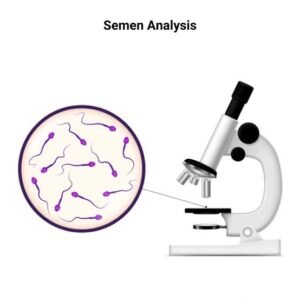
A semen analysis is one of the most important initial investigations when a couple is being evaluated for infertility.
It can assess:
- Sperm concentration/count
- Sperm motility
- Sperm morphology
- Semen volume and other parameters
Male-factor infertility should not be overlooked.
ACOG notes that basic male infertility testing commonly includes semen analysis, while ASRM recommends obtaining at least one semen analysis at the onset of infertility evaluation when a male partner is contributing sperm.
Depending on the results and clinical history, additional evaluation may be recommended.
8. Additional Male Fertility Tests
Not every man requires advanced testing.
Depending on the semen analysis and medical history, a fertility specialist may consider:
- Hormonal testing
- Physical examination
- Urological assessment
- Scrotal ultrasound in selected cases
- Additional investigations when clinically indicated
Advanced sperm tests should not automatically be included in every fertility checkup.
The purpose is to identify clinically meaningful factors that could influence treatment decisions.
9. Fertility Tests for PCOS and Irregular Periods
PCOS is a common condition associated with ovulatory problems.
If someone has:
- Irregular periods
- Long menstrual cycles
- Absent periods
- Acne or increased hair growth
- Difficulty conceiving
a fertility evaluation may investigate ovulation and possible hormonal causes.
The assessment may involve:
- Medical history
- Hormonal evaluation
- Ultrasound
- Ovulation assessment
- Thyroid testing when appropriate
- Ovarian reserve assessment where indicated
Dr. Nitasha Gupta’s fertility services include fertility evaluation and PCOS-related reproductive care, with treatment decisions based on individual assessment. Dr. Nitasha Gupta
Internal link:
PCOS Treatment in Chandigarh
10. Fertility Testing After Recurrent Miscarriage
A fertility evaluation may also be relevant after recurrent pregnancy loss.
The investigation is different from a routine infertility workup and should be individualized.
Depending on the history, the doctor may assess:
- Previous pregnancy history
- Uterine anatomy
- Hormonal or endocrine factors
- Genetic factors where indicated
- Other clinically relevant causes
Dr. Nitasha Gupta’s fertility services include recurrent pregnancy loss evaluation and personalized reproductive planning. Dr. Nitasha Gupta
Are All Fertility Tests Needed for Everyone?
No.
This is one of the most important points to communicate.
A common mistake is assuming that a fertility checkup means ordering every available fertility test.
A good fertility evaluation should be targeted.
For example:
A woman with regular cycles and no concerning history may need a different evaluation from someone with absent periods, previous pelvic surgery or recurrent miscarriage.
Similarly, a man with an abnormal semen analysis may require a different evaluation from a man whose semen parameters are normal.
ASRM specifically recommends avoiding several investigations as routine tests unless there is a clinical indication, including certain advanced sperm tests, laparoscopy for unexplained infertility, thrombophilia testing, immunologic testing and endometrial biopsy.
This is why consultation with a qualified fertility specialist is more useful than purchasing an indiscriminate “fertility test package.”
What Happens After a Fertility Checkup?
The purpose of fertility testing is not simply to collect reports.
The results are interpreted together.
Depending on the findings, your fertility specialist may recommend:
If ovulation is the concern
Ovulation tracking, medication or other treatment may be considered.
If PCOS is affecting ovulation
PCOS management and fertility treatment may be discussed.
If sperm parameters are abnormal
Further male fertility assessment may be recommended.
If the fallopian tubes are blocked
The treatment approach depends on the location and severity of the problem.
If there is unexplained infertility
The couple may be monitored or considered for treatments such as IUI or IVF depending on age, duration of infertility and other factors.
If there is reduced ovarian reserve
The fertility specialist may discuss treatment timing and appropriate fertility options.
If IVF is appropriate
The couple may be guided through IVF, with ICSI or other advanced techniques considered when clinically indicated.
Does a Fertility Checkup Mean You Need IVF?
No.
A fertility checkup comes before deciding on treatment.
Some couples may conceive with:
- Lifestyle changes
- Ovulation tracking
- Medication
- Ovulation induction
- IUI
Others may benefit from:
- IVF
- ICSI
- Fertility preservation
- Hysteroscopy
- Laparoscopy
- Other specialized fertility treatments
The right approach depends on the diagnosis, age, reproductive history, ovarian reserve, semen parameters, tubal status and other individual factors.
Dr. Nitasha Gupta’s fertility services include fertility evaluation, IUI, IVF, ICSI, hysteroscopy, laparoscopy, cryopreservation and other reproductive services. Dr. Nitasha Gupta
Internal links:
When Should You See a Fertility Specialist?
Consider speaking with a fertility specialist if:
- You have been trying to conceive without success
- Your periods are irregular or absent
- You have PCOS or suspected PCOS
- You have known endometriosis
- You have had recurrent miscarriages
- Your partner has an abnormal semen analysis
- You have had previous unsuccessful fertility treatment
- You are concerned about ovarian reserve
- You are planning pregnancy at an older reproductive age
- You have a history of pelvic surgery or reproductive problems
For women under 35, evaluation is generally recommended after 12 months of trying; for women 35 or older, after 6 months. Earlier evaluation may be appropriate when risk factors or concerning symptoms are already present.
Internal link:
How Do You Know If You Need a Fertility Specialist?
Fertility Checkup in Chandigarh & Zirakpur
Patients looking for a fertility checkup in Chandigarh may also consider fertility centres in the wider Tricity region, depending on the location of the clinic and the investigations required.
Dr. Nitasha Gupta provides fertility evaluation through Kore Fertility Centre in Zirakpur, serving patients from Chandigarh, Panchkula, Mohali, Dhakoli, Dera Bassi and surrounding areas. The clinic’s fertility evaluation services include hormonal assessment, AMH testing, ultrasound, ovulation monitoring and semen analysis. Dr. Nitasha Gupta
For patients searching for a fertility checkup in Zirakpur, the evaluation can be planned according to the individual’s medical history, reproductive goals and previous reports.
Internal link:
Complete Fertility Checkup in Zirakpur
Why Choose Dr. Nitasha Gupta for Fertility Evaluation?
Dr. Nitasha Gupta provides fertility and women’s healthcare with a focus on individualized evaluation and treatment planning.
According to the clinic’s current service information, she has 15+ years of clinical experience and provides fertility evaluation, IVF, IUI, ICSI, PCOS management, pregnancy care and advanced reproductive services. Dr. Nitasha Gupta
The clinic’s fertility evaluation approach includes:
- Personalized assessment
- Female and male fertility evaluation
- Hormonal testing
- AMH and ovarian reserve assessment
- Ultrasound and follicular monitoring
- Semen analysis
- Fertility counselling
- Treatment planning based on diagnosis
The aim is not to recommend the most complicated treatment first, but to understand the underlying fertility factors and determine what is medically appropriate.
Frequently Asked Questions
What tests are done in a fertility checkup?
A fertility checkup may include medical history, reproductive assessment, hormonal testing, AMH or ovarian reserve assessment, ultrasound, ovulation evaluation and semen analysis. Additional tests such as HSG or other investigations may be recommended based on individual circumstances.
What is the most important fertility test for women?
There is no single “most important” fertility test for every woman. The appropriate evaluation depends on age, menstrual pattern, medical history and reproductive concerns. AMH, ultrasound, ovulation assessment and other tests may be used when clinically appropriate.
What is the first fertility test for men?
Semen analysis is generally an important initial investigation for male fertility. It evaluates sperm concentration, movement and morphology and can help determine whether additional evaluation is needed.
Is AMH enough to check fertility?
No. AMH primarily provides information about ovarian reserve and should not be treated as a standalone prediction of natural fertility. ASRM recommends using ovarian reserve testing as an adjunct to an infertility evaluation rather than as a standalone screening test.
Can PCOS affect fertility?
Yes. PCOS can interfere with regular ovulation and therefore may make conception more difficult for some women. A fertility evaluation can help determine whether ovulatory dysfunction is contributing to delayed conception.
Do both partners need fertility testing?
When a male partner is contributing sperm, evaluating both partners is important. ASRM recommends that male and female evaluations begin in parallel when applicable.
Is fertility testing painful?
Many initial fertility investigations, such as blood tests, semen analysis and ultrasound, are minimally invasive. Some procedures used to evaluate the uterus or fallopian tubes may involve more discomfort, and the appropriate investigation depends on the individual case.
When should I get a fertility checkup?
Generally, evaluation is considered after 12 months of trying if the woman is under 35, after 6 months if she is 35 or older, and potentially sooner when there are known fertility concerns or risk factors.
Can fertility problems be treated without IVF?
Yes. Depending on the cause, treatment may include lifestyle changes, medication, ovulation induction or IUI. IVF is one option among several and is recommended when appropriate for the individual diagnosis.
Where can I get a fertility checkup near Chandigarh?
Dr. Nitasha Gupta provides fertility evaluation at Kore Fertility Centre in Zirakpur for patients from Zirakpur, Chandigarh, Panchkula, Mohali, Dhakoli, Dera Bassi and surrounding areas. Dr. Nitasha Gupta
Thinking About a Fertility Checkup?
If you have been trying to conceive, have irregular periods, PCOS, previous pregnancy loss, male fertility concerns or previous unsuccessful fertility treatment, a structured fertility evaluation can help identify the next appropriate step.
Dr. Nitasha Gupta provides personalized fertility evaluation and reproductive care at Kore Fertility Centre, Zirakpur, serving Chandigarh, Panchkula, Mohali, Dhakoli, Dera Bassi and nearby areas.
Call / WhatsApp: +91 99883 09211
Book a fertility consultation to understand which fertility tests may be appropriate for you.