
Trying to conceive but unsure whether you need a fertility checkup? Understanding when to seek medical advice, which tests may be recommended, and what happens during your first consultation can help you make informed decisions about your reproductive health.
If you are looking for a fertility checkup in Zirakpur, Dhakoli, Chandigarh, Panchkula or Mohali, a fertility evaluation can help identify potential factors affecting conception and guide the next steps.
At Dr. Nitasha Gupta’s fertility and women’s healthcare practice in Dhakoli, Zirakpur, the evaluation process can begin with a review of your medical history, menstrual cycle, previous investigations and reproductive goals. The tests recommended depend on your individual circumstances; not everyone requires the same investigations or fertility treatment.
This guide explains fertility tests for women and men, when to consult a fertility specialist, factors affecting the cost of an evaluation, and how to prepare for your first appointment.
What Is a Fertility Checkup?
A fertility checkup is a medical evaluation intended to assess factors that may affect a person’s or couple’s ability to conceive. It can include a consultation, medical history review, physical examination where appropriate, blood tests, ultrasound imaging and semen analysis.
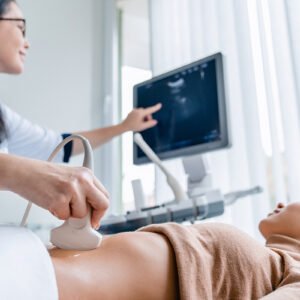
The purpose is to understand whether there may be issues involving ovulation, ovarian reserve, the uterus, fallopian tubes, sperm production or other aspects of reproductive health.
A fertility checkup does not automatically mean you need IVF. Depending on the findings, your doctor may recommend further investigations, timed intercourse, medication, treatment of an underlying condition, IUI, IVF or other appropriate options.
The evaluation should be guided by your age, symptoms, medical history and how long you have been trying to conceive.
When Should You Get a Fertility Checkup?
One of the most common questions couples ask is how long they should try to conceive before seeking medical advice.
General clinical guidance recommends considering a fertility evaluation at the following points:
Under 35 years: Seek an evaluation after 12 months of regular, unprotected intercourse without conception.
Age 35–40 years: Seek an evaluation after six months of trying without conception.
Over 40 years: Consider seeking medical advice promptly rather than waiting several months.
You may need an earlier evaluation regardless of age if you have irregular or absent periods, known endometriosis, suspected problems with the fallopian tubes, a history of certain reproductive conditions, previous treatments that may affect fertility, or a known male fertility concern.
These are general guidelines, not a reason to delay care when you have symptoms or concerns. Your doctor can advise you on the appropriate timing for your circumstances.
Should You Wait One Year Before Seeing a Fertility Specialist?
No. The waiting period does not apply to everyone.
For example, a woman with very irregular periods may not be ovulating regularly. Someone with a known reproductive condition may also benefit from earlier assessment. Similarly, a suspected male fertility problem should be evaluated rather than assuming the issue is exclusively related to the woman.
If you are unsure when to seek help, consider booking a consultation with a fertility specialist in Zirakpur to discuss your medical history and next steps.
What Tests Are Included in a Fertility Checkup?
There is no single fertility test that can explain every difficulty with conception. A doctor selects investigations according to the individual’s symptoms, history and initial assessment.
1. Medical History and Menstrual Cycle Assessment
Your first consultation may cover:
Your age and how long you have been trying to conceive
Menstrual cycle length and regularity
Previous pregnancies and their outcomes
Previous surgeries, infections or reproductive health conditions
Current medicines and relevant medical history
Previous fertility treatments or investigations
Family history where clinically relevant
This information helps the doctor determine which investigations may be useful and whether any conditions need attention before attempting conception.
2. Hormone and Blood Tests
Depending on your history, your doctor may recommend selected blood tests to investigate ovulation or other health factors that can affect fertility.
These may include:
Thyroid function testing when indicated
Prolactin testing when symptoms or history suggest it is appropriate
Progesterone testing to assess ovulation when clinically useful
Selected reproductive hormone tests
Anti-Müllerian hormone (AMH) testing when ovarian reserve assessment is appropriate
Important: Not everyone needs every hormone test. The timing of some tests within the menstrual cycle matters, so follow your doctor’s instructions before arranging blood investigations.
What Does an AMH Test Tell You?
An AMH test can provide information about ovarian reserve, which relates to the remaining pool of eggs. However, it cannot independently determine whether you can conceive naturally or predict an individual’s exact chance of pregnancy.
AMH should be interpreted alongside age, ultrasound findings, medical history and other relevant information. It is not a standalone fertility verdict or a universal screening test for everyone planning a pregnancy.
3. Pelvic Ultrasound and Follicle Assessment
A pelvic ultrasound may help assess the uterus and ovaries. Depending on the clinical question, your doctor may recommend an abdominal or transvaginal ultrasound.
An ultrasound can help identify certain structural findings, assess ovarian appearance and, when appropriate, monitor follicular development.
Follicular monitoring may be recommended in selected cases to assess follicle growth and help determine the timing of ovulation or fertility treatment.
An ultrasound alone cannot rule out every cause of infertility.
4. Fallopian Tube and Uterine Evaluation
In selected patients, further investigations may be recommended to assess the uterus or determine whether the fallopian tubes are open.
Depending on the clinical situation, these may include hysterosalpingography (HSG), saline infusion sonography or hysteroscopy.
These procedures serve different purposes and are not required for every patient. Your doctor will explain which test is appropriate and whether any preparation is necessary.
5. Male Fertility Testing: Semen Analysis
Fertility evaluation should not focus only on women. Male factors can contribute to difficulty conceiving, either independently or alongside female factors.
A semen analysis assesses parameters such as sperm concentration, movement and shape. Additional tests may be considered depending on the results and medical history.
If you and your partner are trying to conceive, ask whether parallel evaluation of both partners is appropriate. This can help avoid unnecessary delays and provide a more complete understanding of the situation.
Fertility Checkup Cost in Zirakpur: What Affects the Price?
The cost of a fertility checkup in Zirakpur depends on the investigations and consultations required. There is no single price that applies to every patient.
Factors that may influence the total cost include:
Initial consultation and follow-up appointments
Hormone and other laboratory tests
AMH testing, when indicated
Pelvic ultrasound or follicular monitoring
Semen analysis
Additional investigations recommended after reviewing initial results
A basic consultation may involve fewer investigations than a comprehensive fertility evaluation. Additional tests should be guided by medical need rather than assuming that every available test is necessary.
How can you get an accurate cost estimate?
Contact the clinic to confirm consultation charges, available investigations and whether tests are billed separately. Ask for an itemised estimate before proceeding with additional investigations.
For appointment enquiries, visit the Fertility Checkup in Zirakpur service page or the Contact page.
What Happens During Your First Fertility Consultation?
Your first fertility appointment is an opportunity to discuss your concerns, understand your medical history and decide on appropriate next steps.
A consultation may involve:
Discussing your concerns: Explain how long you have been trying to conceive and whether you have noticed changes in your menstrual cycle or other symptoms.
Reviewing previous reports: Bring relevant blood tests, ultrasound findings, semen analysis reports and previous treatment records.
Assessing your medical history: Your doctor may ask about medications, previous pregnancies, surgeries and existing health conditions.
Planning investigations: Tests are selected according to your clinical needs rather than using the same checklist for everyone.
Discussing next steps: Once the relevant information is available, your doctor can explain the findings and possible management options.
You do not need to complete every fertility test before your first consultation. In many cases, the consultation helps determine which tests should be done and when.
Can You Improve Your Chances of Conception Before Starting Treatment?
Some practical steps can support preconception health, although they cannot guarantee pregnancy.
Discuss folic acid supplementation and other preconception care with your doctor.
Avoid smoking and seek advice about alcohol use when trying to conceive.
Review existing medical conditions and medicines with your healthcare professional.
Maintain a balanced diet and regular physical activity appropriate to your health.
Track menstrual cycles if useful, while remembering that cycle tracking cannot diagnose every fertility problem.
Attend recommended appointments and complete investigations at the advised time.
Avoid starting fertility medicines, hormone supplements or high-dose nutritional supplements without appropriate medical advice.
If conception has been delayed, lifestyle changes should not replace a recommended fertility evaluation.
Fertility Checkup in Zirakpur, Near Chandigarh and Panchkula
Patients from Zirakpur, Dhakoli, Chandigarh, Panchkula and Mohali may look for fertility care that is accessible and clearly explained.
Dr. Nitasha Gupta’s practice provides fertility and women’s healthcare services from its listed location in Dhakoli, Zirakpur. The appropriate starting point depends on your concern, whether you need an initial fertility evaluation, investigation of irregular periods, or a discussion about treatment options.
The clinic’s Fertility Checkup service page explains the fertility evaluation offering. You can also explore the following related pages:
These pages can help you understand the available services and decide which consultation best fits your needs. The need for any particular treatment should be determined after an appropriate clinical assessment.
Book a Fertility Consultation in Dhakoli, Zirakpur
If you have concerns about conception, irregular menstrual cycles or possible fertility problems, an individual assessment can help you understand which investigations may be appropriate.
Dr. Nitasha Gupta
Fertility and women’s healthcare
Address: SCO 35, Shri Balaji Complex, Dhakoli, Zirakpur, Punjab – 160104
Phone/WhatsApp: +91-99883-09211
For appointment enquiries, visit the Contact page or call the clinic to confirm availability, consultation charges and the investigations offered.
Early evaluation does not mean you must proceed with fertility treatment. It can help you understand your reproductive health and make informed decisions with your doctor.
Frequently Asked Questions About Fertility Checkups
1. When should I get a fertility checkup in Zirakpur?
Generally, consider an evaluation after 12 months of trying if you are under 35, or after six months if you are 35–40. If you are over 40 or have known fertility concerns, seek medical advice earlier.
2. What tests are done during a fertility checkup?
Depending on your medical history, tests may include selected hormone tests, AMH testing, pelvic ultrasound, assessment of the fallopian tubes and semen analysis. Not every patient needs every test.
3. How much does a fertility checkup cost in Zirakpur?
The cost depends on the consultation and investigations required. Contact the clinic for current charges and an itemised estimate based on your needs.
4. Can I get a fertility checkup if my periods are irregular?
Yes. Irregular or absent periods can indicate problems with ovulation or other conditions that may affect conception. A doctor can assess your history and decide which investigations are appropriate.
5. Should both partners get fertility tests?
When a couple is experiencing difficulty conceiving, evaluating both partners in parallel is often appropriate. Semen analysis is a common initial investigation for male fertility.
6. Does a fertility checkup mean I need IVF?
No. A fertility checkup is an assessment, not a commitment to IVF. Depending on the findings, management may involve observation, lifestyle guidance, medication, treatment of an underlying condition, IUI, IVF or other options.
7. Is an AMH test enough to know whether I can get pregnant?
No. AMH provides information about ovarian reserve but cannot independently determine whether natural conception is possible or predict an individual’s exact chance of pregnancy. It must be interpreted in the wider clinical context.
8. How should I prepare for my first fertility appointment?
Bring previous blood tests, ultrasound reports, semen analysis results if available, a list of medicines and information about your menstrual cycles and how long you have been trying to conceive. Ask the clinic whether any tests require advance preparation.
9. Can I consult a fertility specialist near Chandigarh or Panchkula?
Patients from Chandigarh and Panchkula can enquire about consultations at Dr. Nitasha Gupta’s listed clinic in Dhakoli, Zirakpur. Confirm appointment availability, travel details and the services relevant to your needs before visiting.
10. Can fertility problems affect men as well as women?
Yes. Fertility difficulties may be related to male factors, female factors, a combination of both or causes that remain unexplained after evaluation. Assessing both partners when appropriate can help guide further investigations.
Medical Disclaimer
This article provides general educational information and is not a substitute for an individual medical consultation, diagnosis or treatment plan. Fertility investigations and treatment decisions should be based on a qualified healthcare professional’s assessment of your circumstances.